As an Amazon Associate I earn from qualifying purchases.
Sublimation works best on polyester and on hard items made with a sublimation-ready polymer coating, but that still leaves you with a surprisingly long list of things you can print on.
You are not limited to 100% polyester T-shirts. Mugs, tumblers, phone cases, wood blanks, glass, metal, fabric accessories, and dozens of other sublimation items can work too, as long as the actual material or coating can accept the dye.
The confusing part is that two products can look almost identical and behave completely differently in a heat press. A regular white ceramic mug is not the same thing as a sublimation mug. Cotton canvas and polyester canvas are both sold as canvas, but only one is suitable for direct sublimation.
In this guide, I’ll explain what types of materials work best, where coatings matter, and which materials I would avoid. There is also a detailed list further down if you came here to check one specific material.
How Sublimation Works
Sublimation printing uses special dye ink that changes from a solid into a gas when heated. Under heat and pressure, that dye enters polyester fibers or a compatible polymer coating. As the material cools, the dye remains inside the surface instead of sitting on top of it like a layer of vinyl.
That is why a properly sublimated design has no raised edge to feel with your fingers. It also cannot peel or crack like a surface-applied graphic. Color can still fade eventually from heavy UV exposure or wear, so I would not describe any print as literally fade-proof.
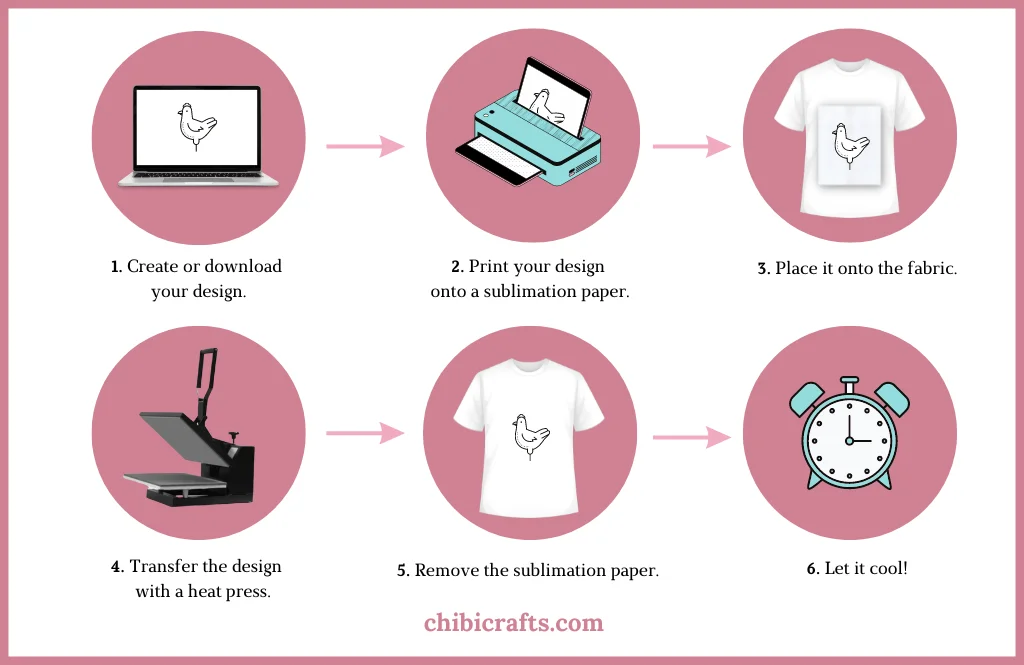
The usual process is simple: create the design, print it in reverse onto sublimation paper, secure the transfer to the blank, press it using the temperature and time specified for that blank, then remove the paper and let the item cool.
A sublimation blank is an undecorated product made specifically to accept sublimation ink. With fabric, this usually means polyester. Hard sublimation blanks normally have a receptive polymer coating added during manufacturing.
That distinction is important because a product does not become a sublimation blank simply because it is white or heat-resistant. If I’m buying a mug, metal panel, ornament, tumbler, or another hard item, I look for an explicit statement that it is made for sublimation.
If you want to learn more about the process itself, I explained the printers, paper, ink, pressing process, and common mistakes in this complete guide to sublimation printing.
What Materials You Can Sublimate On
Let’s start with the easiest option. Polyester is the most reliable material for direct sublimation, and higher polyester content generally produces stronger colors.
A 100% polyester product gives the dye the most polyester fibers to bond with. Blends can work too. A shirt made from 65% polyester and 35% cotton will keep the image on the polyester fibers, but the cotton portion will not permanently retain the sublimation dye. The finished print therefore looks softer and more vintage than the same design on 100% polyester.
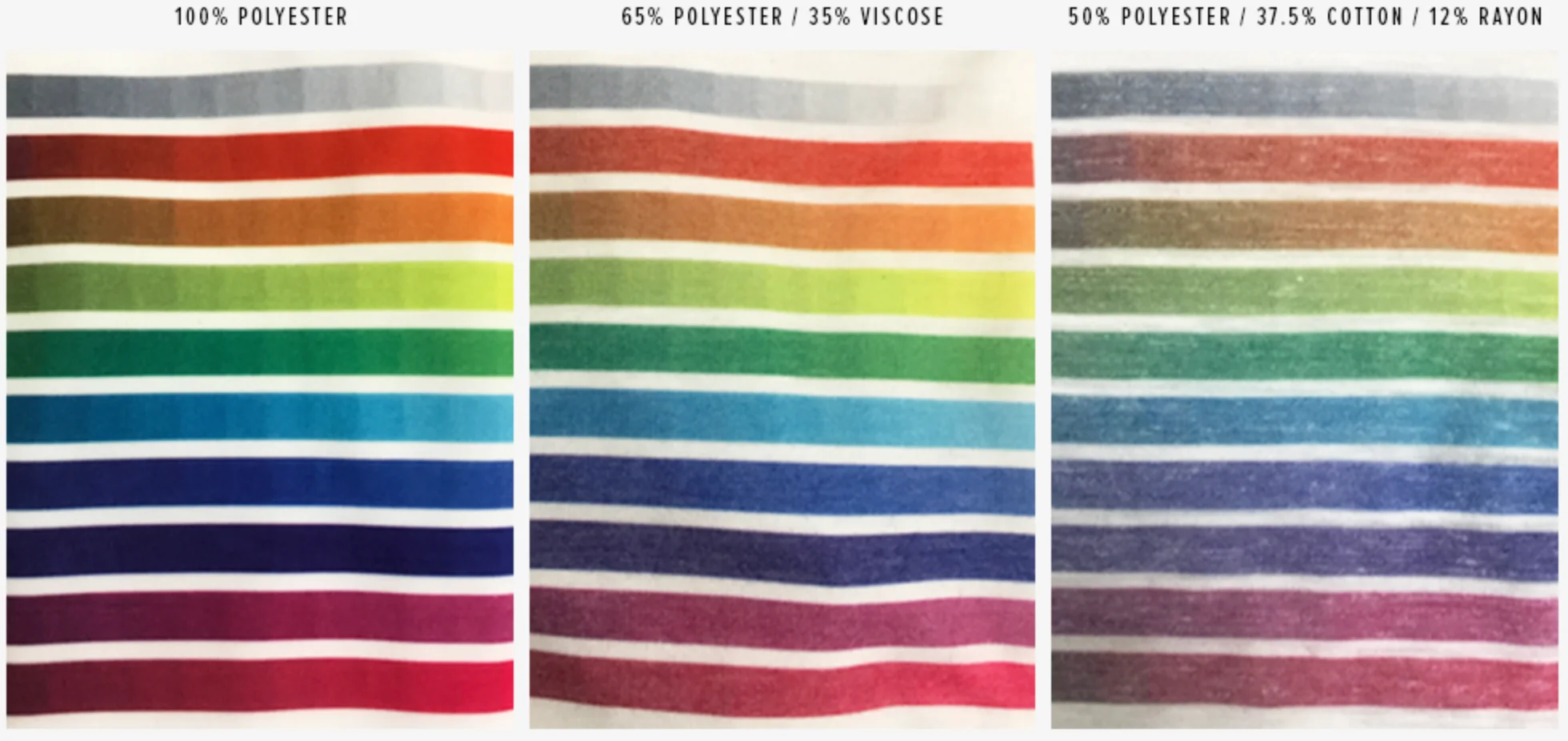
You can see the difference clearly in that comparison. The 100% polyester sample holds much more of the original saturation. At 50% polyester, a large part of the image is intentionally lost into the non-polyester fibers.
There is no hard cliff where 64% polyester fails and 65% suddenly works. Think of polyester percentage as a scale. More polyester usually means more dye remains in the fabric after washing.
Color matters too. Sublimation printers do not normally print white ink, so the blank acts as the white portion of your design. White gives you the most accurate colors. Pale pink, gray, blue, or another light fabric can work, but the base color will show through every transparent or white area of the artwork.
Dark fabrics are a different problem. Transparent sublimation ink cannot cover black fabric with a bright yellow design because there is no opaque white layer underneath it.
Hard items work for a different reason. Ceramic, stainless steel, glass, aluminum, wood, and similar materials normally need a sublimation-compatible coating or printable layer. You are usually sublimating the coating rather than the underlying mug, metal, or piece of wood itself.
So, for a standard sublimation project, I check for one of two things:
high polyester content in fabric, or a clear statement that a hard blank is sublimation-ready.
That rule prevents most failed transfers.
Where to Get Sublimation Blanks
For common sublimation items, Amazon is one of the easiest places to start. You can find everything from basic shirts and mug blanks to phone-case inserts, keychains, ornaments, tumblers, photo panels, and less common project blanks.
The convenience is useful, but I always read the material description instead of trusting the product photo. A listing that says only “polyester feel” or “suitable for crafts” is not enough. For fabric, check the actual fiber percentage. For a hard product, look for explicit sublimation compatibility.
Discount and craft stores can also be useful, especially for inexpensive project supplies. Just be careful with ordinary household products. A white Dollar Tree mug, tile, cutting board, or piece of wood may look exactly like an item used in a sublimation tutorial without having the coating needed to reproduce the result.
For projects where consistency matters, specialist sublimation stores are usually the safer choice. They tend to provide the substrate, dimensions, printable side, and recommended press settings. I especially prefer that when I’m ordering multiple copies of the same blank and need them to behave the same way from one batch to the next.
The same applies to blanks from specialist crafting stores. They can cost more than a generic alternative, but paying for a product made specifically for sublimation can be cheaper than ruining several mystery blanks while trying to find the right settings.
List of Materials You Can Sublimate On
This is the section I wish I had when I first started looking at unusual sublimation projects.
The important thing to remember is that a material name alone does not always give you the answer. “Fleece” can be polyester or cotton. “Leather” can mean real animal hide or a manufactured faux-leather sublimation blank. The exact composition matters.
I’ve kept the notes practical so you can quickly tell whether something works directly, requires a special version, or is better left out of the heat press.
Fabrics
Note: This table refers to the actual fiber or fabric listed. Blends can behave differently. A 75% polyester / 25% cotton garment, for example, can give a good sublimation result even though 100% cotton does not.
| Material | Notes |
|---|---|
| Canvas | Polyester canvas works well for sublimation. Traditional artist and utility canvas is often cotton, so check the label before pressing it. |
| Cotton | Standard sublimation dye does not permanently bond to cotton. The transfer can look good immediately after pressing and then fade badly in the wash. Use polyester, sublimation HTV, or another system designed for cotton. |
| Rayon | Not a reliable direct sublimation fabric. Rayon is cellulose-based, so use a polyester blend or a compatible transfer layer instead. It is also sensitive to high heat. |
| Leather | Natural leather is not a normal direct sublimation substrate. Sublimation leatherette and coated faux-leather blanks are a much better choice. |
| Nylon | Some nylon products can take disperse dyes, but nylon varies significantly and can be heat-sensitive. I would only sublimate nylon when the blank manufacturer specifically recommends it. |
| Microfiber | Often good, provided the microfiber is mostly polyester. Check the composition because microfiber can also contain a substantial amount of nylon. |
| White HTV | Sublimation-compatible white HTV creates a printable layer on fabrics that cannot be sublimated directly. Make sure the vinyl is specifically intended for sublimation. |
| Fleece | Polyester fleece works. Cotton fleece does not work for direct sublimation, so again, check the fiber content rather than the fabric name. |
| Modal Fabric | Modal is a cellulose-based fiber and does not work like polyester. Use a polyester blend or a suitable transfer/coating system. |
| Burlap | Natural jute burlap is not a good direct substrate. Polyester faux burlap or a purpose-made coated blank is much easier to work with. |
| Satin | Polyester satin can produce sharp, saturated results. Real silk satin will not behave the same way because “satin” describes the weave, not the fiber. |
| Neoprene | Many sublimation mouse pads and can coolers use a polyester fabric face over neoprene. You sublimate the polyester face, not the neoprene core itself. |
| Spandex | Poly/spandex blends are commonly sublimated. High stretch content can make the fabric more sensitive to heat and may change how the design looks when stretched. |
| Felt | Polyester felt is suitable. Wool felt is not. Cheap craft felt is often polyester, but it is still worth checking the package. |
| Velvet | Polyester velvet can accept sublimation dye, but heat and pressure can flatten the pile. Natural cotton or silk velvet is not suitable for direct sublimation. |
| Viscose | 100% viscose is not a normal direct sublimation fabric because it is cellulose-based. Polyester-viscose blends can retain dye in the polyester portion. |
| Polypropylene | I would not treat ordinary polypropylene as a standard sublimation fabric. It can deform at temperatures used for sublimation. Use only a product specifically manufactured and rated for the process. |
| Faux Fur | It depends on the fiber. Polyester faux fur can accept dye, but the long pile makes detail difficult and heat can change the texture. Test a scrap first. |
| Linen | Natural linen does not permanently hold standard sublimation dye. A polyester linen-look fabric works much better. |
| Polyamide | Polyamide includes nylon, so the same caution applies. Do not assume it will behave like polyester simply because both are synthetic. |
| Sherpa | Polyester sherpa can be sublimated, although the fluffy surface is better for bold artwork than tiny details. |
| Silk | Real silk is not a reliable standard sublimation substrate. Color transfer may occur, but wash durability and heat tolerance make it a poor choice. |
| Polyester | This is the main fabric used for direct sublimation. 100% polyester gives the strongest and most predictable color. |
| Poly-Cotton Blends | Yes. The polyester fibers hold the dye and the cotton fibers do not. More polyester means a stronger finished image. |
| Denim | Traditional denim is mostly cotton and will not work well directly. Polyester denim or polyester-rich stretch denim can work. |
| Organza | Polyester organza can be sublimated. Silk organza cannot be treated the same way, so check the composition. |
| Twill | Polyester twill works well. Cotton twill does not accept standard sublimation dye permanently. |
| Jersey | Polyester sports jersey fabric is one of the most common sublimation substrates. Cotton jersey needs a different transfer method. |
One thing this table makes obvious is that names such as satin, felt, jersey, fleece, and canvas are not enough on their own. Read the fiber label.
If the material is polyester-rich, you probably have a usable starting point. If it is primarily cotton, linen, rayon, wool, or another natural/cellulose fiber, standard direct sublimation is the wrong process.
Hard Substrates
Quick tip: You can prepare many ordinary hard surfaces for sublimation yourself. The usual method is to clean the surface, apply a polymer sublimation coating, let it dry, and cure the coating before pressing your design. The exact preparation changes with the material, so I’ve added the method I would use for each one below.
| Material | Notes |
|---|---|
| Wood | Sand bare wood smooth, remove every trace of dust, and make sure it is completely dry. Then apply a sublimation coating or a thin layer of water-based polycrylic and let it cure fully before pressing. Another option for flat pieces is heat-applied lamination film. Bare wood can take some color without treatment, but the print will usually be much duller and less durable. |
| Acrylic | Start by checking that the acrylic can tolerate sublimation temperatures. Remove the protective film and clean the surface carefully. Some cast acrylic can accept sublimation dye directly, but unknown acrylic may soften or warp. If it is not specifically suitable for direct sublimation, use a coating designed for acrylic and cure it according to its instructions. |
| Glass | Clean the glass thoroughly with alcohol or another residue-free cleaner. On a very smooth or glossy surface, an adhesion promoter helps the coating stick. Spray on a thin, even sublimation coating, let it dry, then heat-cure it before transferring the image. A white base coat can also be useful if you don’t want the glass itself showing through the transparent sublimation ink. |
| Stainless Steel | Degrease the steel carefully because even fingerprints can interfere with the coating. Apply a thin, even layer of hard-surface sublimation coating and cure it completely before pressing. Bare stainless steel does not give the dye anything useful to bond with. |
| Ceramic | Wash and degrease the surface, then apply a clear sublimation coating in light, even passes. Glossy ceramic may need an adhesion promoter first. Cure the coating fully before sublimating. If you’re coating mugs or plates yourself, keep the treated area decorative rather than putting a DIY coating on surfaces that directly contact food or drink. |
| Chipboard | Chipboard is porous, so first make sure the face is smooth and sealed. A flat lamination film is often the easiest DIY approach. You can also seal the surface and then add a compatible sublimation coating. Keep heat exposure under control because thin board can warp. |
| Metal | Sand only if the coating manufacturer recommends it, then remove dust and degrease the metal thoroughly. Apply a hard-surface sublimation coating in an even layer and cure it. If the metal is polished or especially slick, use an adhesion promoter before the sublimation coating. |
| Painted Wood | Sand the wood first, apply your paint, and let it cure completely. Lightly sand any brush marks, wipe the surface clean, then add a clear sublimation-compatible coating. Water-based polycrylic is also commonly used for this DIY method. A white painted base gives much better color accuracy because sublimation ink itself has no white. |
| Aluminum | Clean and degrease bare aluminum, then apply a polymer sublimation coating and cure it completely. For brushed or raw aluminum, remember that the metal color will remain visible through light areas of the design unless you apply a compatible white base before the clear sublimation layer. |
| Bamboo | Sand the printable face until smooth, remove the dust, and make sure the bamboo is dry. Then seal and coat it with a sublimation-compatible polymer layer. Bamboo’s natural yellow-brown color will affect the finished design, so use a white base first when accurate colors matter. |
| Epoxy Resin | I would not prepare ordinary finished epoxy resin for sublimation. The heat required for the transfer can soften, distort, or discolor some resins. If you want a resin-looking project, sublimate the image onto a suitable surface first and add resin afterward instead. |
| Marble | Clean and completely degrease the stone. If the face is polished, use an adhesion promoter when required by your coating system, then apply the sublimation coating evenly and cure it. A white or translucent-white base can help when the marble pattern would otherwise interfere with the image. |
| Plywood | Sand the printable side smooth and remove the dust. One of the easiest methods is to separate a laminating pouch and heat the film directly onto the plywood before sublimating on top of it. You can also use a polymer sublimation coating. The lamination method gives you a consistent synthetic surface while still letting you start with ordinary plywood. |
| MDF | Make sure the MDF is flat and dry, then lightly sand and clean the face. Because MDF is porous, seal it before applying a sublimation coating, or apply heat-resistant lamination film to the printable side. Preheating briefly can also help remove moisture that might otherwise cause warping or an uneven transfer. |
| Slate | Wash the printable face, remove grease and dust, then apply a sublimation coating in thin, even passes. Let it dry and cure completely before pressing. If the slate has a polished finish, an adhesion promoter can improve how well the coating holds. |
Hard blanks are where I pay the most attention to the manufacturer’s instructions.
Two glossy white tumblers may look identical but use different coatings. One supplier might recommend a different time or temperature from another. Generic charts are useful as a starting point, but the instructions for the actual blank take priority.
The base color matters here too. Sublimation ink remains transparent on a hard surface. A white-coated aluminum panel gives you a neutral background. Clear glass, natural wood, brushed metal, or another colored surface becomes part of the artwork.
Specialty Items
| Material | Notes |
|---|---|
| Mirrors | Ordinary mirrors are not direct sublimation substrates, but purpose-made sublimation mirror blanks do exist. Use the coated product rather than a random household mirror. |
| Balloons | No. A balloon cannot tolerate normal sublimation heat and pressure. |
| Candles | I would not attempt direct sublimation onto candle wax. Techniques that wrap printed tissue or another layer around a candle are different processes. |
| Chalk Paint | Chalk paint itself is not a reliable sublimation surface. If a craft uses it, the printable layer or coating applied over it determines whether the transfer works. |
| Coir | Natural coir does not give the crisp, saturated result associated with polyester. A polyester-faced mat made for sublimation is a better option. |
| Cork | Sublimation-ready cork blanks work well. Raw cork is less predictable, so check whether the item has a printable coating or top layer. |
| Enamel | Only use enamel items specifically made for sublimation. The coating and the underlying item both need to tolerate the press temperature. |
| Flannel | Check the composition. Polyester flannel can work. Traditional cotton flannel cannot be directly sublimated with good permanence. |
| Jute | Natural jute is not a good direct sublimation material. A polyester imitation or coated product is more reliable. |
| Melamine | I would avoid experimenting with ordinary melamine dinnerware in a heat press. If a sublimation product exists, follow its manufacturer’s instructions and intended use, especially for anything involving food. |
| Muslin | Traditional muslin is cotton, so standard sublimation will not permanently bond. Polyester muslin-look fabrics are different. |
| PVC | Do not put unknown PVC into a heat press. High heat can damage it and overheating PVC can release hazardous decomposition products. Use another substrate unless the product is specifically designed for heat transfer. |
| Sticker Paper | Use sublimation-specific sticker or vinyl media designed for the ink and pressing process. Standard office sticker paper is not interchangeable with it. |
| Plastic | This is too broad a category for a single yes or no. Some purpose-made plastics can be sublimated, but other plastics warp long before reaching a useful transfer temperature. |
| Mouse Pads | Most sublimation mouse-pad blanks have a white polyester fabric top bonded to a rubber or neoprene base. The polyester face receives the image. |
| Tumblers | Yes, if the tumbler has a sublimation coating. Ordinary stainless tumblers need a suitable coating before standard dye sublimation will work. |
| Ornaments | Ceramic, aluminum, MDF, hardboard, and other ornament blanks can all work when sold with a sublimation-ready surface. |
| Keychains | Common sublimation keychains use coated metal, MDF, acrylic, or another printable insert. Check which side is designed to be pressed. |
| Puzzles | Sublimation puzzles are usually made from coated hardboard or polyester-faced material. Ordinary cardboard puzzles are not a substitute. |
| Can Coolers | Polyester-faced neoprene can coolers are easy sublimation blanks. Press the printable polyester surface using the settings supplied for the product. |
| Magnetic Sheets | Use magnetic blanks specifically designed for sublimation. Ordinary magnetic sheet material may deform or have no receptive surface. |
That gives you a useful way to judge new sublimation items even when they are not in this table.
First, find out what the printable surface is actually made from. Then check whether it can tolerate the required temperature. If it is a hard item, confirm that the surface is specifically designed to receive sublimation dye.
If a listing gives you none of that information, I would not sacrifice an expensive project to find out.
Conclusion
You can sublimate on far more than polyester shirts, but most successful projects still follow the same basic rule.
Standard sublimation needs polyester or a compatible polymer-coated surface.
For fabric, higher polyester content gives you stronger and more permanent color. Blends can work when you deliberately want a softer result. Cotton and other natural fibers need an additional printable layer or a different transfer system.
For mugs, metal, glass, wood, acrylic, stone, and other hard products, buying a proper sublimation blank is usually much easier than trying to turn an ordinary household item into one.
And don’t rely on appearance alone. Two blanks can have the same shape, finish, and color but use completely different materials underneath.
When I’m unsure, I check the fiber percentage or manufacturer’s specifications before I switch on the heat press. It takes a minute and is much cheaper than finding the answer after the blank is already warped, washed out, or ruined.