As an Amazon Associate I earn from qualifying purchases.
The best sweatshirt for sublimation is a light-colored, polyester-rich garment with a smooth surface that can handle the heat of your press. If I want the strongest colors, I look for 90% to 100% polyester. For a softer, intentionally faded print, I will go down to a 65% or even 50% polyester blend.
That sounds simple, but finding a sweatshirt I actually want to wear is harder. Many of the nicest blank hoodies are cotton-heavy, and many 100% polyester options have the shiny athletic feel I do not particularly like.
That is why this list includes both high-polyester sweatshirts for vivid designs and softer poly-cotton options for projects where I am happy with a vintage result. I would not use all eight for the same artwork.
My favorite overall is the Oalka Women’s Hoodie, which combines 87% polyester with a softer, stretchier feel than most high-polyester sweatshirts. If print saturation matters more than anything else, the Toloer Men’s Pullover Sweatshirt is the safer choice because it is 100% polyester.
What to Look for in Sweatshirts for Sublimation
Fabric composition matters more than the brand name.
Sublimation ink turns into a gas under heat and bonds with polyester. Cotton does not permanently hold standard sublimation dye. On a 65% polyester / 35% cotton sweatshirt, the polyester fibers retain the image, but the cotton portion does not. The result is softer and more distressed after washing.
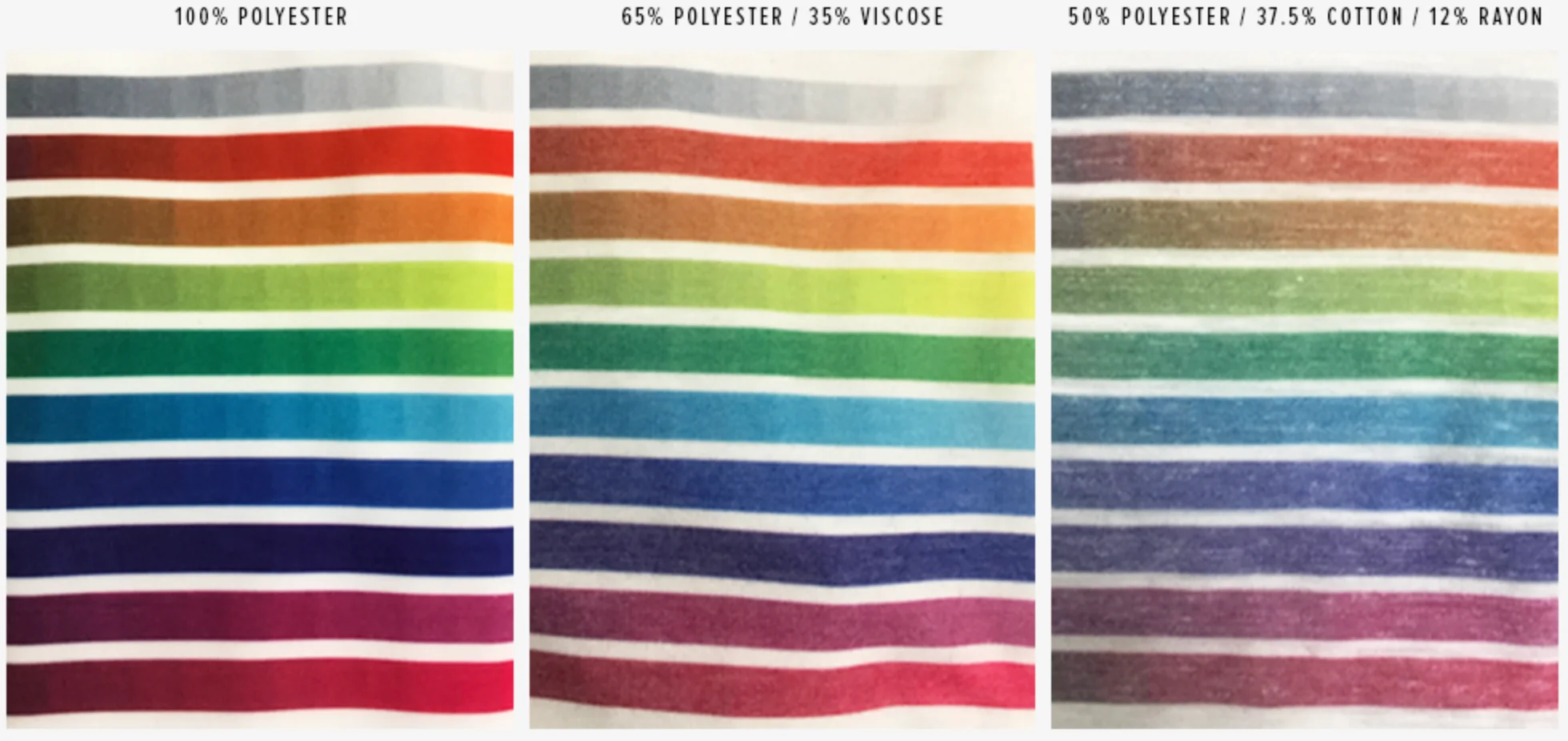
There is no magic cutoff at 65%. Polyester percentage is better thought of as a scale.
| Polyester content | What I expect from sublimation |
|---|---|
| 90-100% | Strongest color and best choice for detailed, saturated artwork |
| 75-89% | Still fairly vibrant, with a little more softness from the blend |
| 60-74% | Noticeably softer print, useful when I want a vintage effect |
| Around 50% | Intentionally faded result, not my choice for color-critical work |
I personally treat that percentage as part of the design rather than simply asking whether a hoodie “can be sublimated.” A 50/50 sweatshirt can produce a nice result if the faded appearance is intentional. It is a poor blank if I am trying to reproduce a saturated illustration exactly.
There are a few other details I check before buying.
Color is one of them. Standard sublimation ink is transparent, so the garment underneath becomes part of the finished color. White is the easiest option. Light gray and pale colors can work, but they tint the design. I would not buy a black or dark navy hoodie for ordinary direct sublimation and expect the artwork to appear normally.
I also look at the surface itself. A smooth polyester face is easier to print cleanly than very textured fleece. Thick seams, pockets, zippers, and drawstrings can get in the way if they sit close to the pressing area.
Spandex deserves some care too. Stretchy poly-spandex hoodies can produce excellent color, but I avoid unnecessary heat and pressure because elastic fibers are more heat-sensitive than plain polyester. I always check the garment and transfer-paper recommendations before pressing a new blank.
Finally, a good blank hoodie for screen printing is not automatically a good hoodie for sublimation. Many high-quality blank hoodies made for DTG or screen printing are mostly cotton. They may feel better and cost more, but that does not give sublimation dye anything useful to bond to.
If I were producing dozens of identical hoodies for a business, I would also prioritize purpose-made blanks with stable sizing and repeatable stock. Several options below are normal retail sweatshirts that happen to have useful fabric compositions. I like those for personal projects and small batches, but availability can be less predictable than a wholesale blank line.
1. Oalka Women’s Hoodie
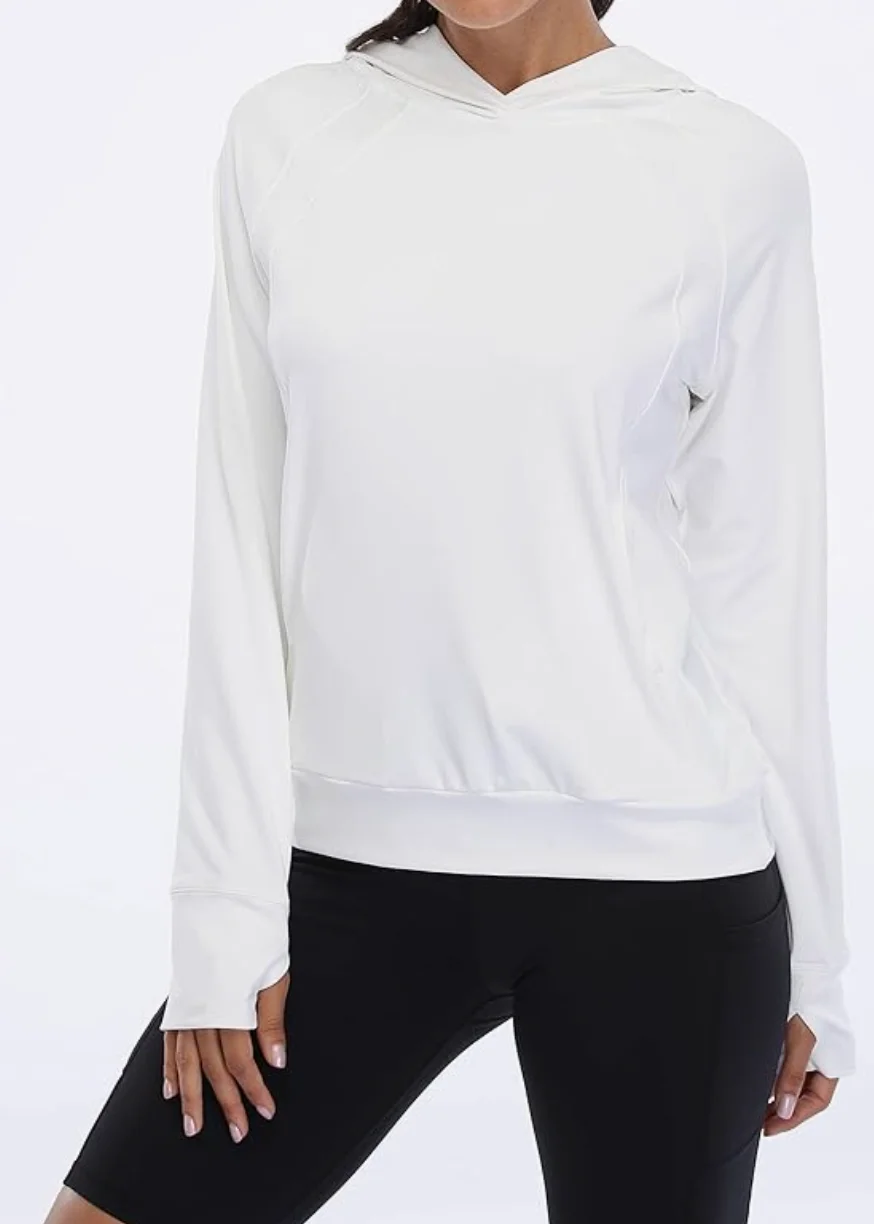
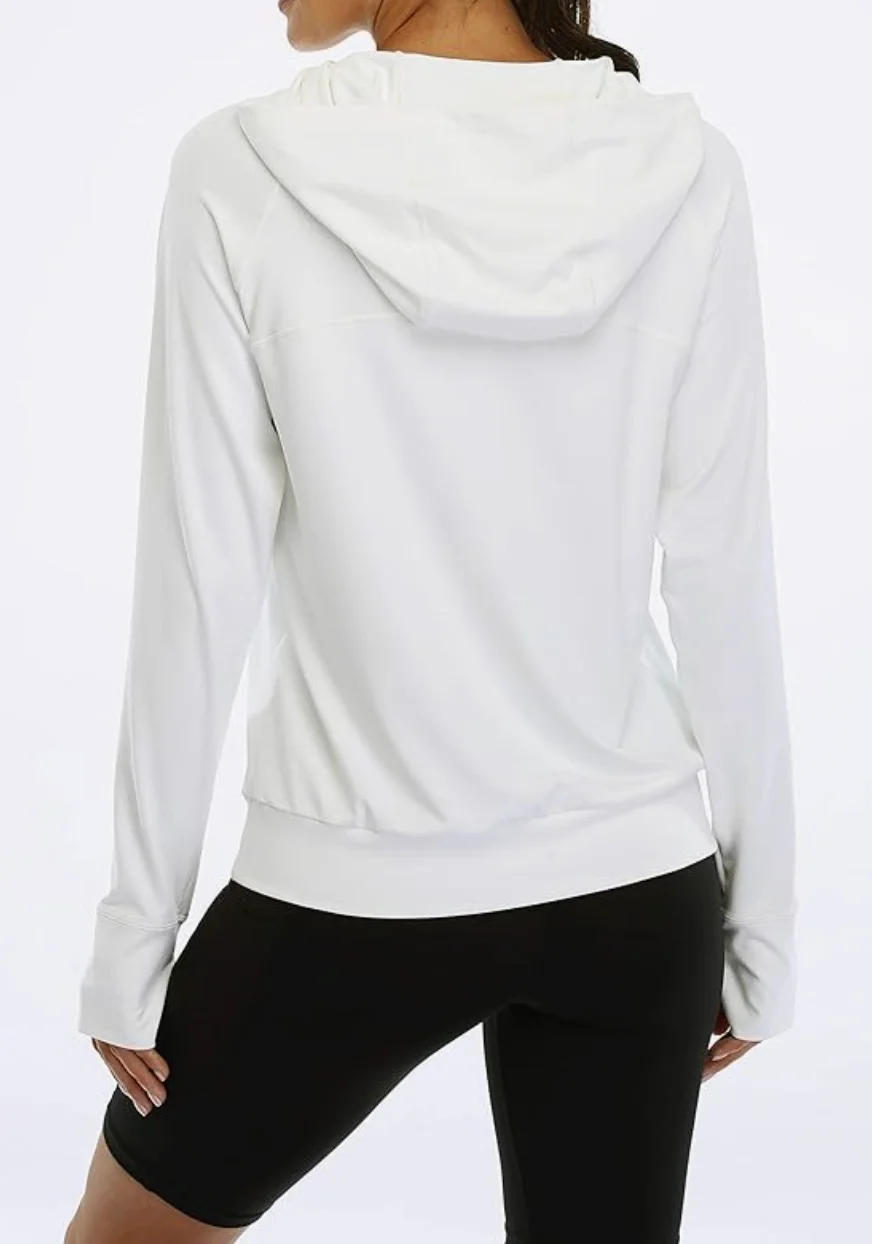
The Oalka Women’s Hoodie remains my favorite balance between print quality and something I would actually want to wear.
It uses 87% polyester and 13% spandex. That is enough polyester for significantly stronger color than a typical cotton-heavy hoodie, but the spandex makes the fabric stretchier and less stiff than many basic polyester blanks.
It also has two front pockets and thumbholes. I particularly like the thumbholes on this kind of fitted hoodie because they keep the sleeves in place and make it feel more like activewear than a traditional bulky sweatshirt.
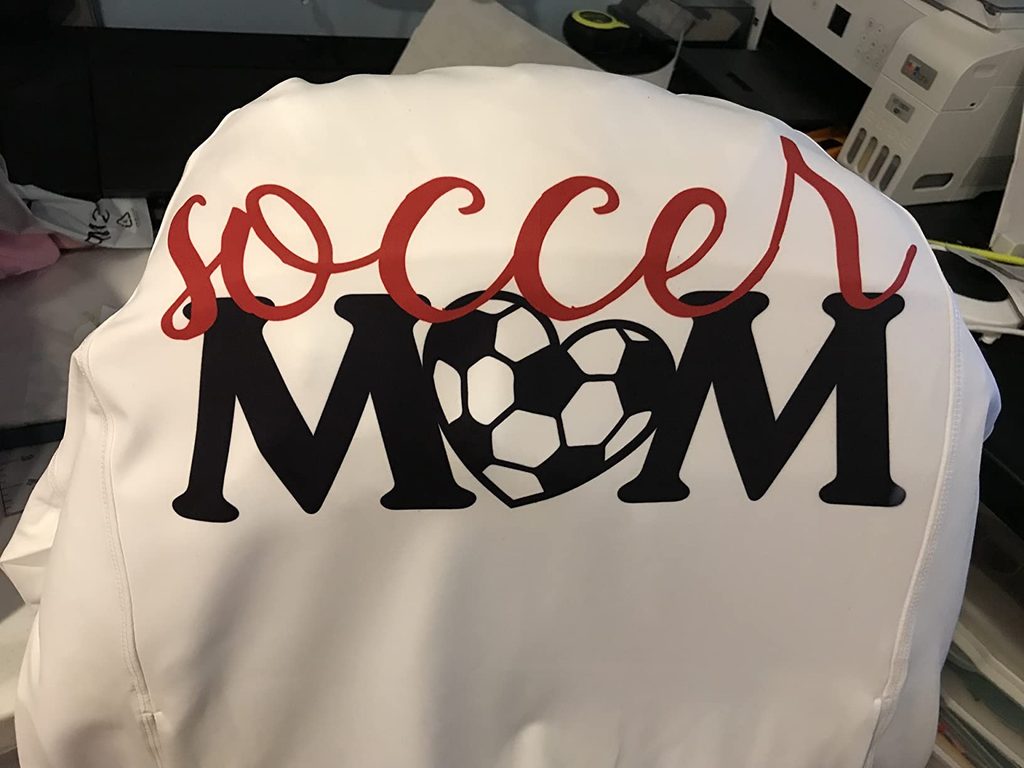
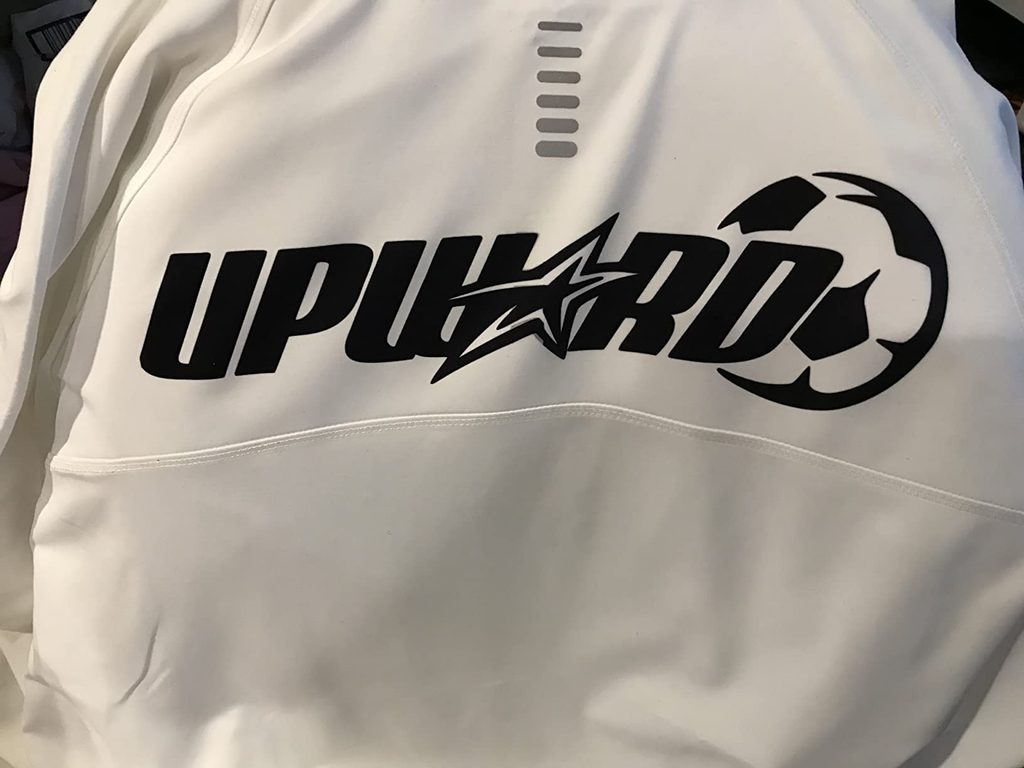
For sublimation, I would use the Oalka for colorful graphics where I want good saturation but do not absolutely need the maximum possible color density of 100% polyester. The 87% polyester content is a useful compromise.
There is one limitation. The 13% spandex means I would test my press settings before committing an important design. Too much heat or pressure can be harder on stretch fabric, and stretching the material during pressing can also change the shape of the transferred artwork.
Sizing is another thing I would check carefully. I had to go smaller than my usual size, so I would use the actual size chart rather than automatically ordering whatever letter size I normally wear.
For a one-off women’s hoodie that still feels like normal clothing after I decorate it, this is the one I would start with.
Best for: a comfortable high-polyester women’s hoodie with strong color.
2. Magcomsen Men’s Sweatshirt
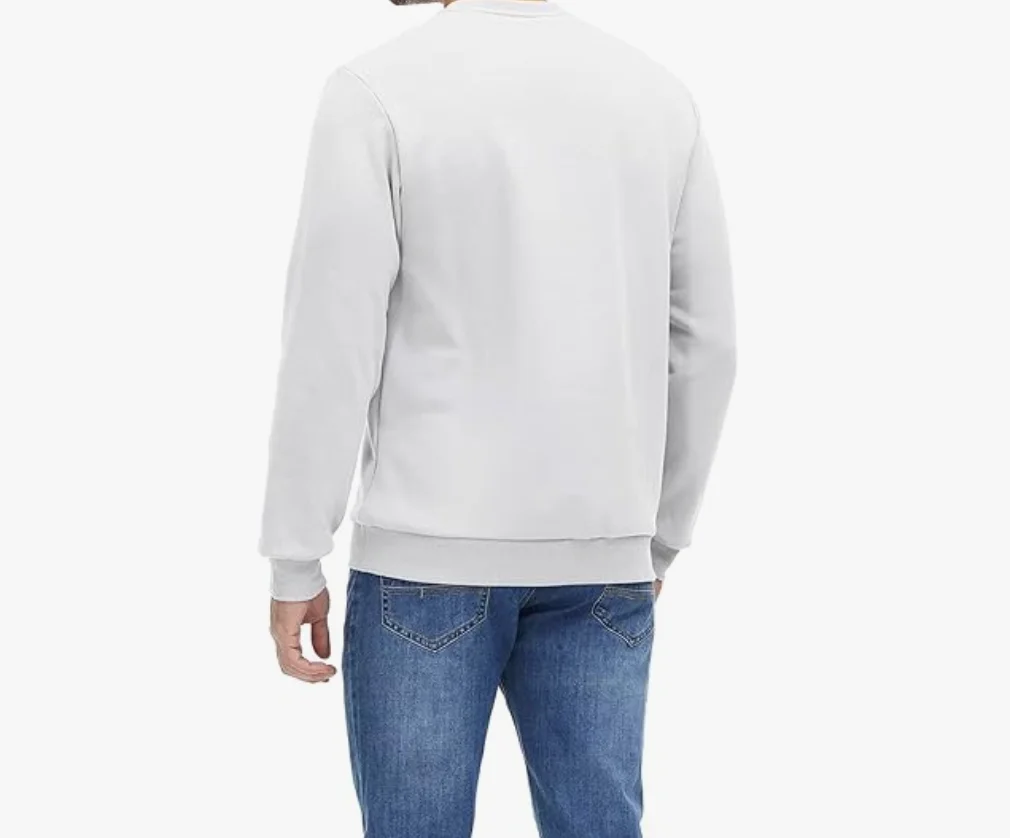
The Magcomsen Men’s Sweatshirt is a completely different choice because it is 65% polyester and 35% cotton.
I would not buy this expecting the same saturation as the Oalka or Toloer. Roughly one third of the garment is cotton, and standard sublimation dye does not permanently bond to those fibers.
That is exactly why I still think it deserves a place here. A 65/35 blend can be useful when I want the design to look deliberately worn-in instead of freshly printed.
The sweatshirt itself has a traditional crew neck, long sleeves, ribbed cuffs, and a ribbed hem. The fleece lining also makes it warmer than the thinner athletic-style polyester garments I usually find when searching for sublimation-friendly clothing.
This is the kind of sweatshirt I would use for a retro graphic, old-school text design, or artwork that already has distressed edges. I would not use it for a photograph or a design where exact, saturated color matters.
The other advantage is feel. Cotton changes the character of the garment noticeably. If someone dislikes the slick feel associated with some 100% polyester clothing, this blend is much easier to live with.
Use a white or very light color if possible. A faded print on a light blank can look intentional. A faded print competing with a dark garment usually just looks weak.
Best for: comfortable men’s sweatshirts with an intentional vintage sublimation effect.
3. BeadChica Women’s Hoodie
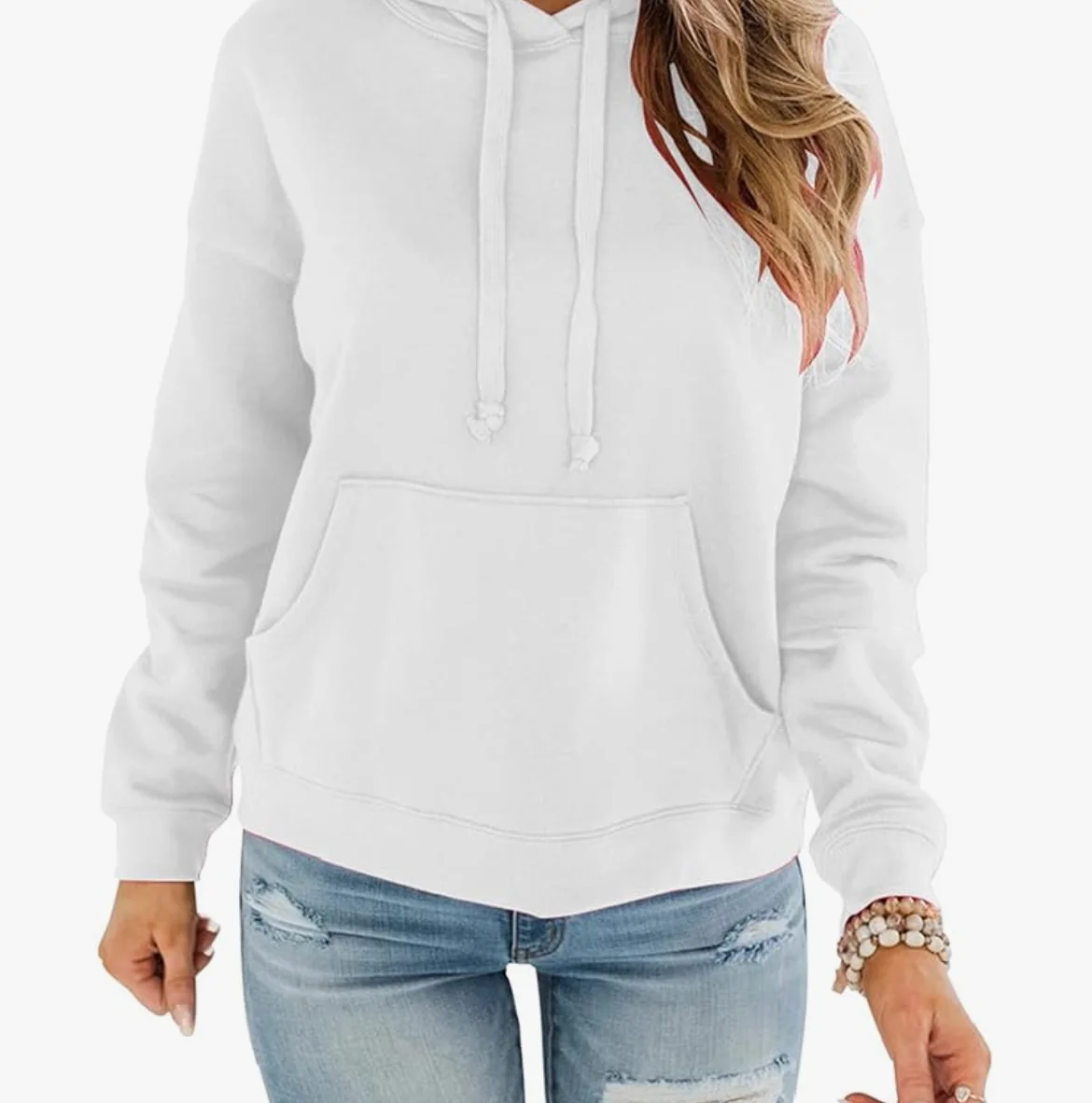
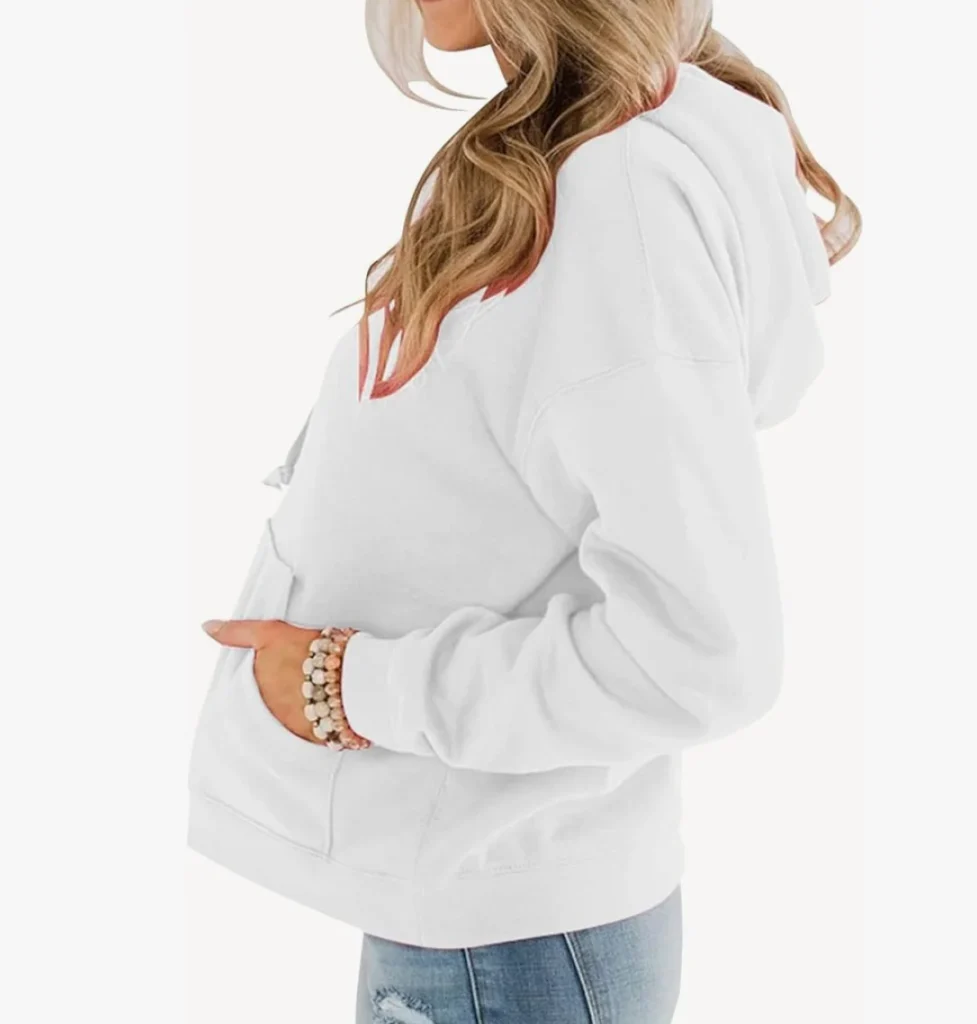
The BeadChica Women’s Hoodie comes much closer to an ideal sublimation fabric blend.
It is 95% polyester and 5% spandex, so nearly the entire printable surface can hold sublimation dye. That makes it one of the strongest choices in this list for bright colors.
The small amount of spandex adds stretch without reducing the polyester content much. The material is also relatively lightweight, which makes this feel very different from a thick cotton fleece hoodie.
If my design had gradients, small colorful details, or areas where I wanted the transferred color to stay close to the original file, I would choose this before any of the 50/50 or 65/35 options.
There is a tradeoff. It is not the heavyweight blank hoodie I would choose for a traditional streetwear feel. It makes more sense when print performance and a lighter, stretchy garment are priorities.
As with the Oalka, I would be conservative with heat until I know how that particular garment behaves. Polyester is ideal for the dye, but spandex does not benefit from being cooked under a press longer than necessary.
4. Magcomsen Women’s Sweatshirt
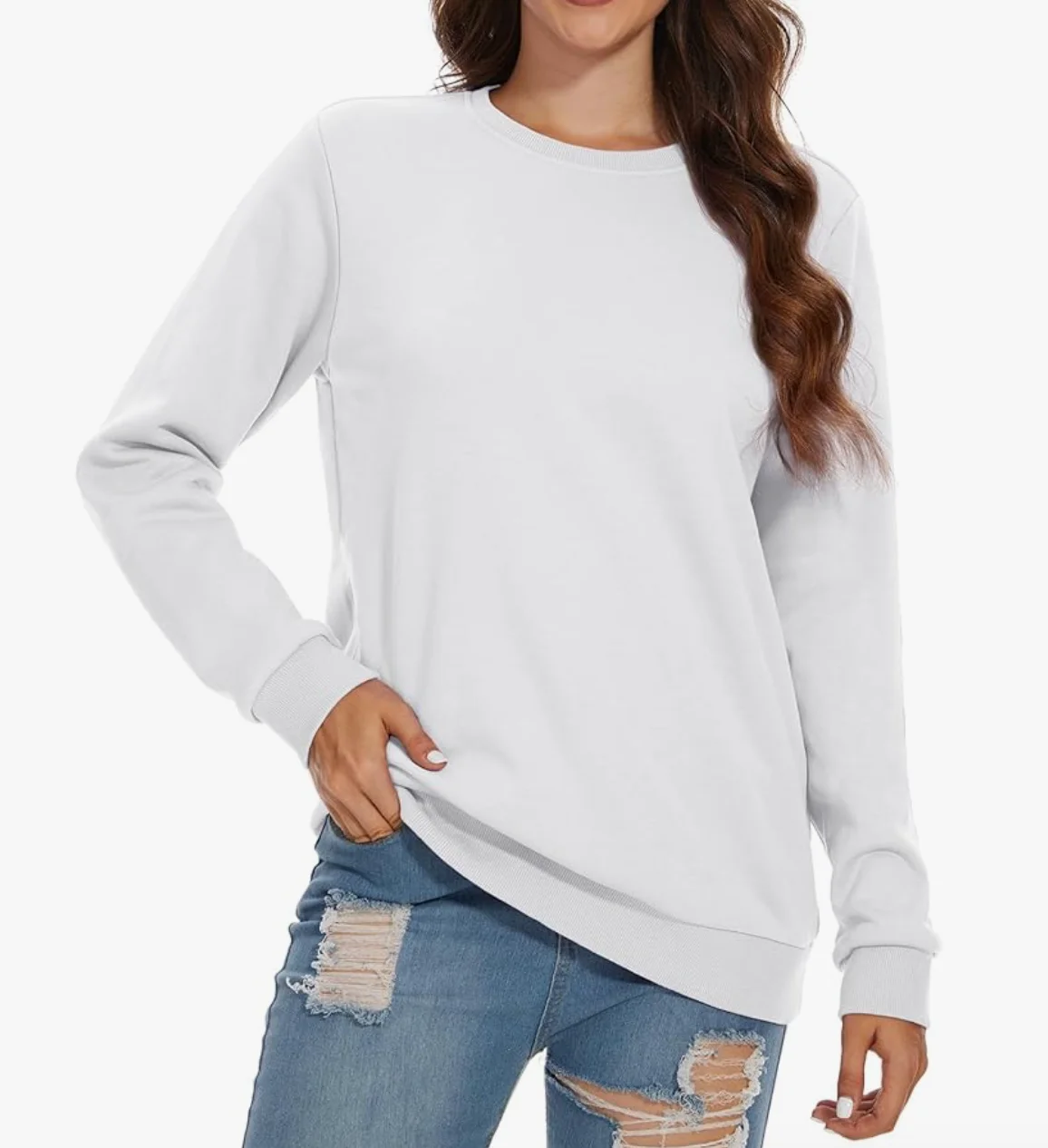
The Magcomsen Women’s Sweatshirt uses 66% polyester and 34% cotton.
That one percentage point does not make it meaningfully different from the men’s Magcomsen in printing behavior. I would still treat it as a polyester-cotton blank for faded sublimation rather than a high-saturation blank.
What makes it useful is the garment itself. It has a crew neck, fleece interior, long sleeves, and ribbed cuffs. It feels closer to the kind of sweatshirt I would buy as everyday clothing than many thin 100% polyester blanks.
For me, this is another design-first choice. If I wanted sharp black text surrounded by highly saturated colors, I would go higher in polyester. If the artwork was supposed to look soft, washed, or slightly retro, the fabric composition actually helps create that result naturally.
One mistake I would avoid is judging the finished project immediately after pressing. A cotton-poly blend can look stronger at first. The real character becomes clearer after washing because the dye on the cotton portion does not have the same permanence as the dye bonded to polyester.
Best for: a softer women’s sweatshirt when faded sublimation is part of the look.
5. Toloer Men’s Pullover Sweatshirt
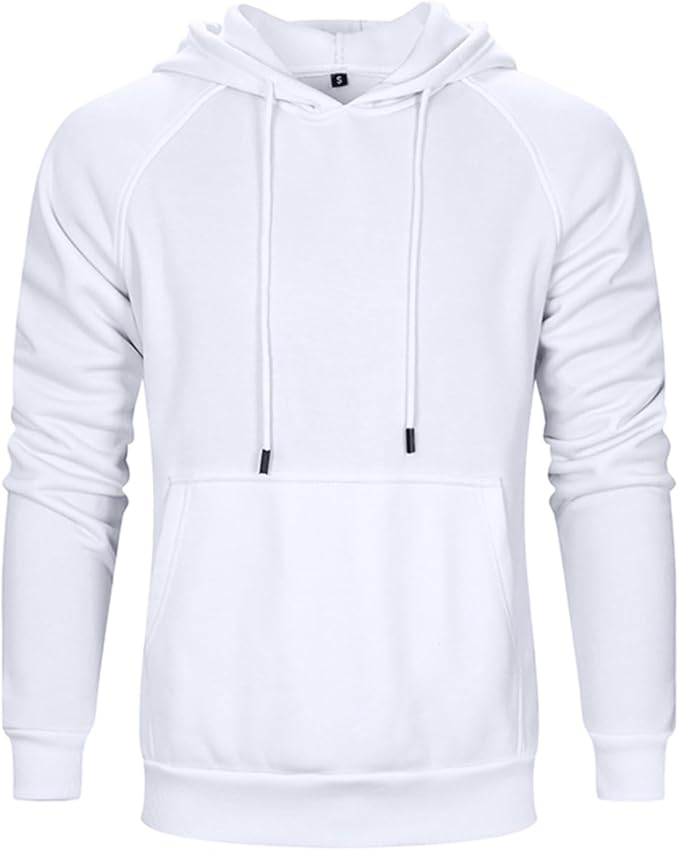
If I only cared about the fabric composition for direct sublimation, I would choose the Toloer Men’s Pullover Sweatshirt.
It is 100% polyester.
That gives sublimation dye the maximum amount of polyester fiber to bond with and makes this the most straightforward option in the ranking for bright, durable color.
This is the blank I would reach for when the artwork itself is the priority. Colorful illustrations, logos with several shades, and detailed designs all benefit from starting with 100% polyester instead of deliberately sacrificing part of the image to cotton fibers.
The sweatshirt has a hood with a drawstring, metal tips, a kangaroo pocket, ribbed cuffs, and a ribbed waistband.
Those details make it more wearable, but they also matter when pressing. The pouch pocket creates additional thickness on the front of the garment. I would make sure the pressing area lies flat and use an appropriate pressing pillow or pad when necessary rather than letting a seam change the pressure under part of the design.
The obvious tradeoff is feel. A full-polyester sweatshirt will not automatically feel like a premium cotton streetwear blank. That comes down to the knit and construction, not just the fiber percentage.
For sublimation itself, though, this is the cleanest option in the top eight.
Best for: maximum sublimation color and designs where fading is not wanted.
6. Jerzees Men’s Hoodie
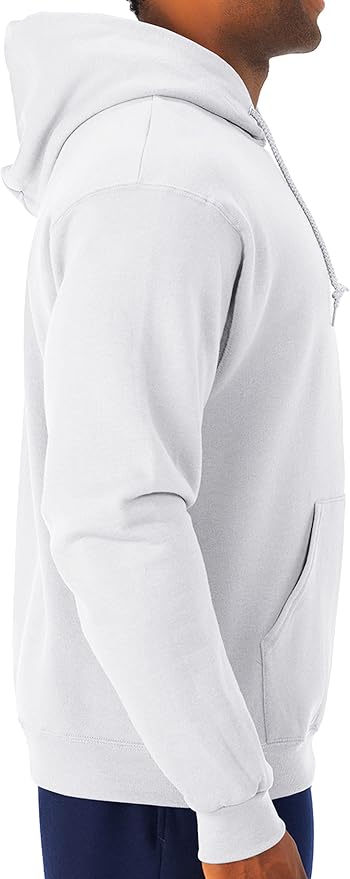
The Jerzees NuBlend Hoodie is one of the more traditional blank hoodies in this list.
It uses 50% cotton and 50% polyester NuBlend fleece, with the exact ratio varying slightly for some colors. The standard fabric is around 8 oz, and Jerzees describes it as pill-resistant, pre-shrunk fleece.
That makes it a good blank hoodie in the conventional sense. It has a high-stitch-density surface, a front pouch pocket, ribbed cuffs, and a familiar midweight hoodie construction.
For sublimation, though, the 50/50 composition is the important limitation.
Half of the fibers are cotton. I expect substantial fading compared with a 90% or 100% polyester hoodie, particularly after washing. I would buy this because I want that effect, not because I am willing to tolerate it.
The upside is comfort and structure. This feels much more like a classic fleece hoodie, and Jerzees offers the style across a much wider range of sizes and colors than many random Amazon fashion garments.
If I were making a washed-looking college graphic, faux-vintage logo, or distressed design, this would make sense. For a customer’s full-color portrait, it would not.
I would also pay attention to the specific color before ordering. Some Jerzees color variants use slightly different fiber ratios, and dark colors remain a poor choice for normal sublimation regardless of how nice the hoodie itself is.
Best for: a classic blank hoodie when the goal is intentionally faded sublimation.
7. The Gym People Women’s Oversized Sweatshirt
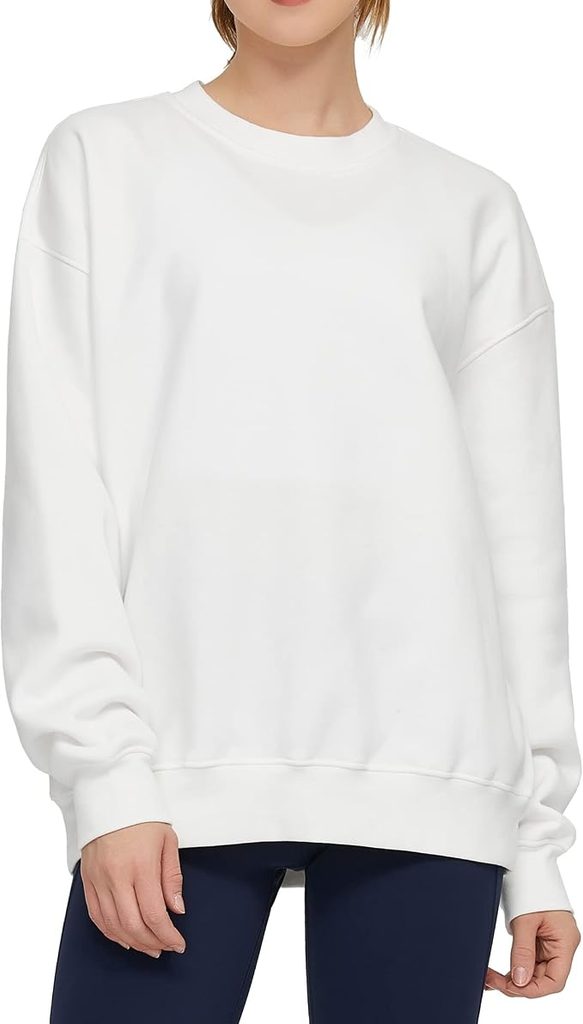
The Gym People Women’s Oversized Sweatshirt sits in a useful middle ground at 75% polyester and 25% cotton.
That is enough polyester for considerably better retention than a 50/50 hoodie, but there is still enough cotton to soften both the garment and the final print.
I like this ratio for projects where I want obvious, colorful sublimation without the more synthetic feel of a 100% polyester sweatshirt. I still would not expect it to match Toloer for saturation.
The current sweatshirt is a loose-fitting fleece crew neck with a warm plush lining. It has ribbed cuffs and hem, and the fit is deliberately oversized.
The heavier fleece is worth thinking about before pressing. A thick sweatshirt does not always sit as flat as a thin shirt, particularly around seams. I would position the garment carefully and make sure the printable area is level before applying pressure.
The oversized cut also gives you a fairly generous visual area for a front design. I think it suits larger graphics much better than tiny left-chest artwork.
If someone asked me for one garment that tries to balance print quality, softness, and a modern oversized fit, this is probably the one I would show them first.
Best for: a compromise between stronger sublimation color and a soft oversized sweatshirt.
8. Hanes Girls Crewneck Sweatshirt
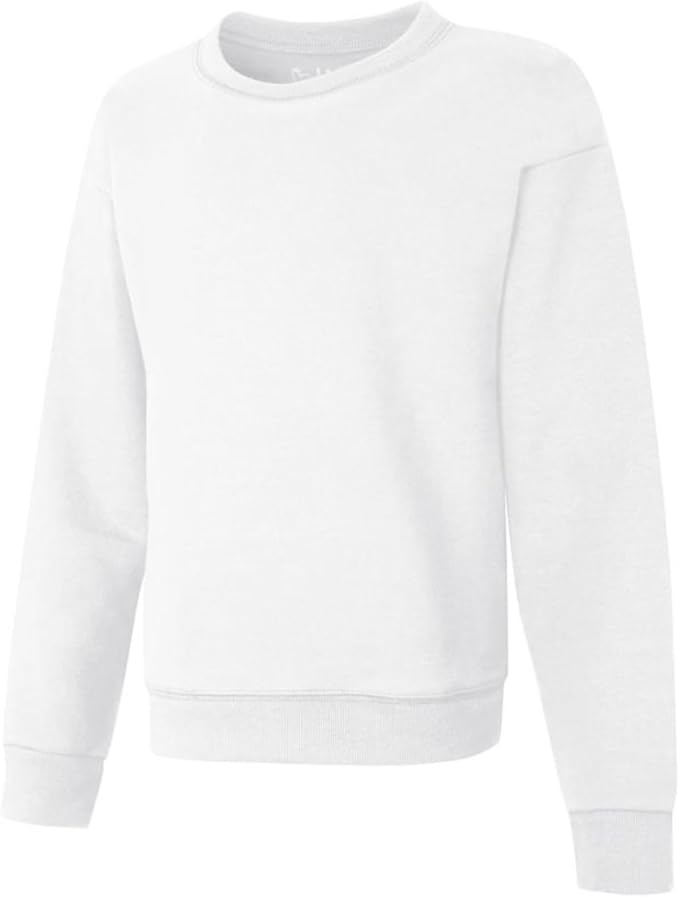
The Hanes Girls EcoSmart Crewneck Sweatshirt is the youth option in my list.
The relevant versions use a 50% cotton and 50% polyester fleece, so the same warning that applies to Jerzees applies here. This is not the blank I would choose for maximum sublimation saturation.
What it does offer is a familiar midweight sweatshirt shape in smaller sizes. The EcoSmart youth crewneck uses low-pill, high-stitch-density fleece with ribbed cuffs and waistband.
For children’s projects, that predictable sweatshirt construction can matter more than chasing the absolute highest polyester percentage. It gives you a simple front area without a zipper or kangaroo pocket interfering with placement.
The 50/50 blend gives the finished design a worn-in appearance after washing. I think that can work well for simple names, school-style graphics, retro characters, or artwork designed around the faded effect.
For very bright cartoon artwork, I would look for a higher-polyester youth blank instead.
I would also choose white or another very pale shade whenever possible. Because sublimation has no white ink layer, the sweatshirt color shows through every unprinted and translucent area of the design.
Best for: smaller sizes and deliberately soft-looking sublimation projects.
Which Hoodie Should You Choose?
There is no single best blank hoodie for every sublimation project because the fabric itself becomes part of the finished design.
For the strongest color, I would choose Toloer first because it is 100% polyester. BeadChica is very close at 95%, and Oalka gives up a little more polyester in exchange for a stretchy activewear feel that I prefer for everyday use.
The Gym People sweatshirt is my middle-ground option. Its 75% polyester content still gives the dye plenty of synthetic fiber to bond with, but the sweatshirt feels more like a substantial fleece garment.
Magcomsen, Jerzees, and Hanes are different. I would only choose their lower-polyester blends when I actually want the faded result. A 50/50 hoodie is not a cheaper substitute for a 100% polyester sublimation blank. It creates a different type of print.
And if you are searching for high-quality blank hoodies for printing in general, check the printing method before buying. Cotton-heavy blanks can be excellent for screen printing, DTG, embroidery, or DTF and still be a poor choice for direct sublimation.
For my own projects, I check four things before I order: the exact fiber label, the garment color, how flat the area I want to press is, and whether the finished fabric is something I would actually enjoy wearing. Polyester percentage gets you most of the way to a technically successful transfer. It does not tell you whether you will like the sweatshirt once the press cools down.