As an Amazon Associate I earn from qualifying purchases.
Jelly Blox are worth the higher price if you want something that works as both a building toy and a genuinely satisfying sensory toy. I bought the 20-piece Creative Kit expecting soft building blocks for small children. A few weeks later, I had started stealing my favorite ones back from the kids.
That was not the plan.
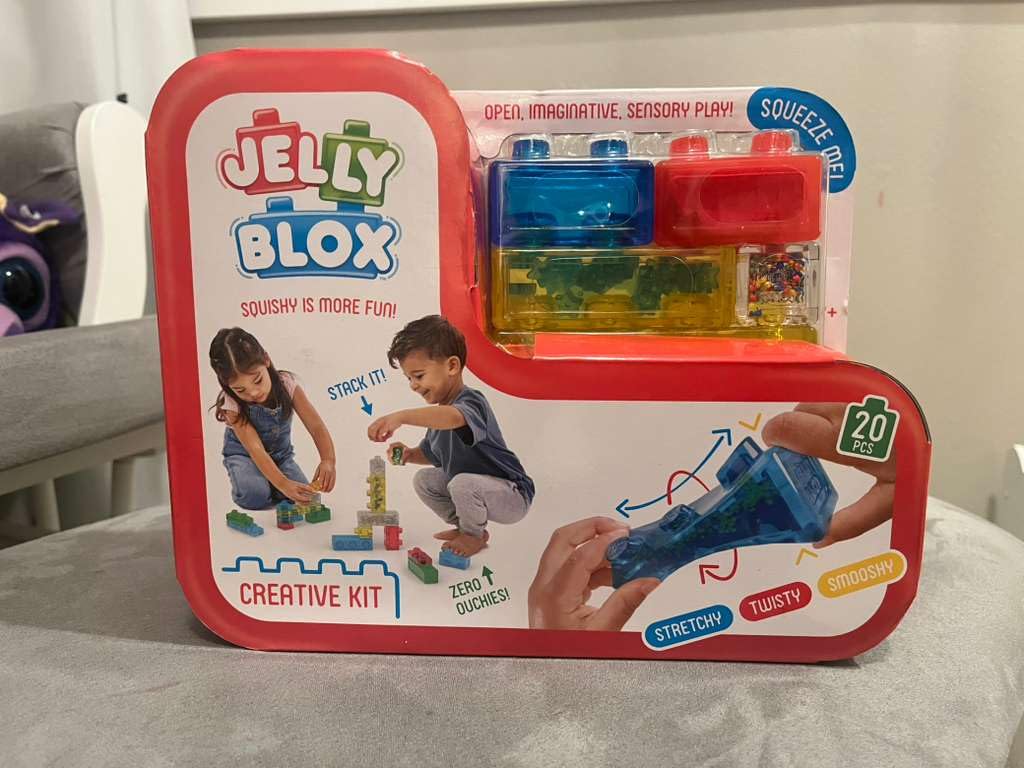
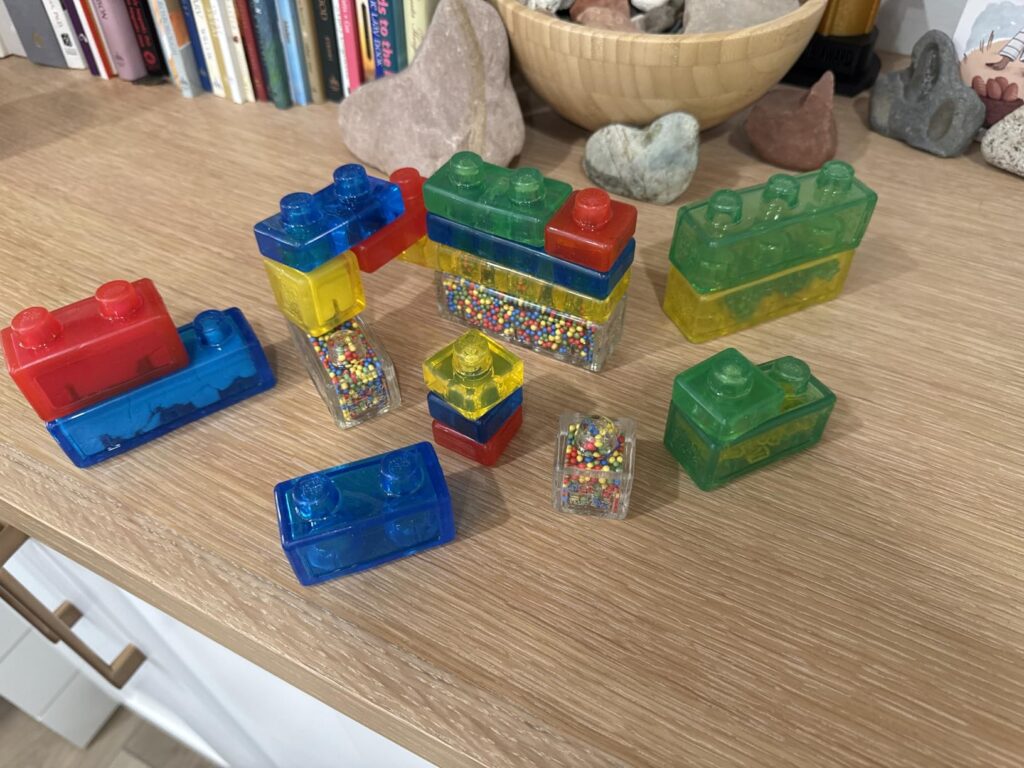
I was curious because Jelly Blox looked so different from normal construction toys. The blocks are soft enough to squeeze and stretch, but they still connect so you can actually build with them. I tried the Creative Kit with children between two and five years old, and I spent quite a lot of time playing with it myself.
My first concern was the price. The box does not look huge, and 20 pieces can feel like very little if your reference point is a tub full of traditional plastic blocks. After actually using them, I think the comparison is slightly unfair. Building is only half of what makes Jelly Blox interesting.
- What Jelly Blox Actually Feel Like
- I Like Them More as Fidgets Than I Expected
- Building Takes More Effort Than With Hard Blocks
- The MESH Accreditation Makes More Sense After Playing
- Stepping on Jelly Blox Doesn't Hurt
- They Have Survived Much Rougher Play Than I Expected
- Cleaning Them Is Easy
- My Main Complaint Is Still the Price
- Are Jelly Blox Good for Two-Year-Olds?
- They Work Surprisingly Well as a Travel Toy
- Who I Think Will Actually Enjoy Them
- My Verdict After a Few Weeks
What Jelly Blox Actually Feel Like
The first thing I noticed was that these do not feel like ordinary rubber blocks.
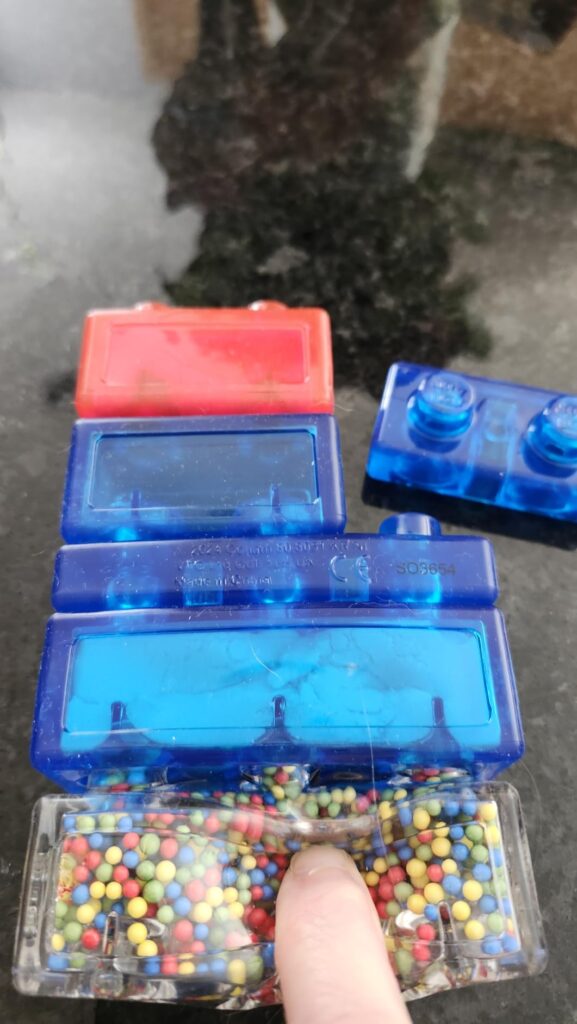
They are soft, springy, and slightly tacky where they touch each other. That tackiness helps them stay connected, but I don’t get the unpleasant sticky residue on my hands that I associate with some squishy toys.
You can squeeze a block almost flat and watch it return to shape. Pulling on one stretches the material noticeably. Twist it and the whole block bends instead of fighting you like rigid plastic.
Then there are the filled blocks.
Some contain sand or foam balls. Others have little stars or tiny bricks inside. Those immediately became the pieces everyone looked for first.
My favorite is the green block with the yellow beads inside. I also keep going back to the sand-filled pieces because the resistance changes as you squeeze them. Press slowly and you can feel the filling move away from your fingers. Turn the block around and it feels slightly different again.
That variety matters more than I expected. A plain soft block is pleasant to squeeze, but one with something moving inside keeps my hands occupied much longer.
The transparent sections also make the fillings part of the visual experience. The kids hold them up, shake them, turn them over, and inspect what moves inside before they even start building.
I Like Them More as Fidgets Than I Expected
This was the biggest surprise for me.
Jelly Blox are sold primarily as construction toys for toddlers and preschoolers, but I would happily keep a few on my desk as fidgets.
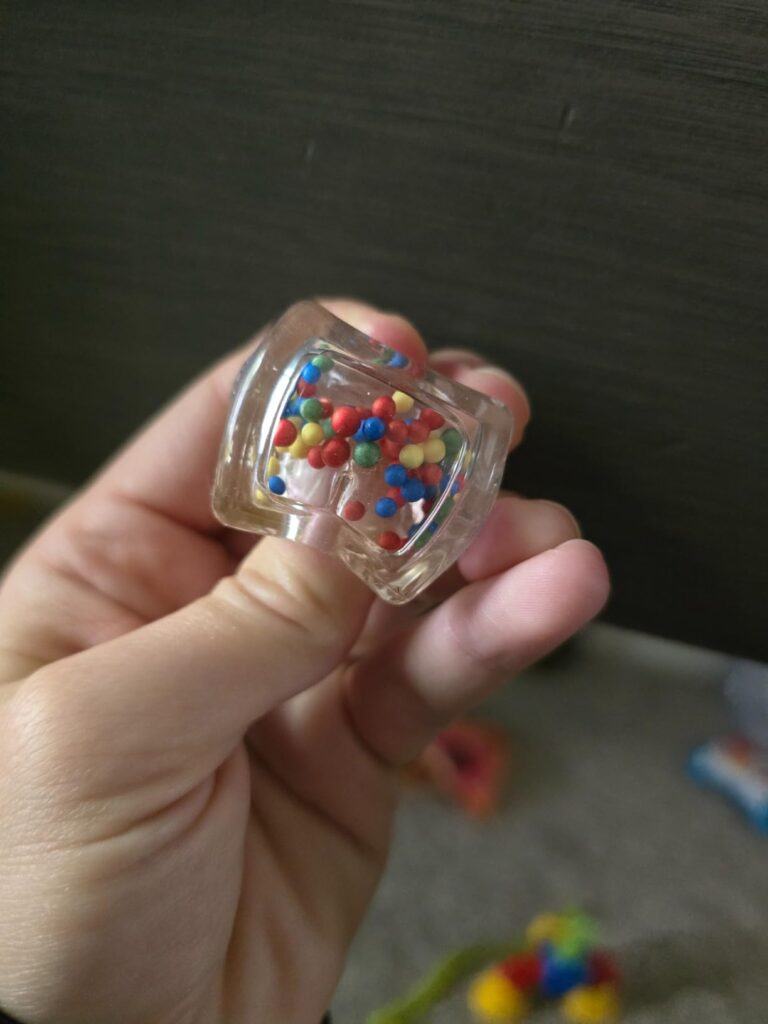
There is enough resistance that squeezing one feels deliberate. They are not so soft that your fingers simply sink through them, and they are not firm enough to become tiring after a minute.
I regularly caught myself squeezing a block while watching something instead of giving it back to the children.
A pair also works surprisingly well as a travel fidget. They are quiet, light, and difficult to accidentally break by throwing them into a bag. There are no clicking mechanisms to annoy everyone around you.
I would not describe Jelly Blox as some kind of treatment for anxiety. They are toys. But if you already like keeping something in your hands while watching TV, reading, or sitting at a desk, the sensory side absolutely works for adults too.
The kids use them in almost the same way. Sometimes they build. Sometimes a block just sits in one hand during a cartoon and gets squeezed for ten minutes.
Both are valid uses.
Building Takes More Effort Than With Hard Blocks
Jelly Blox do connect, but don’t expect them to behave exactly like LEGO or another rigid construction system.
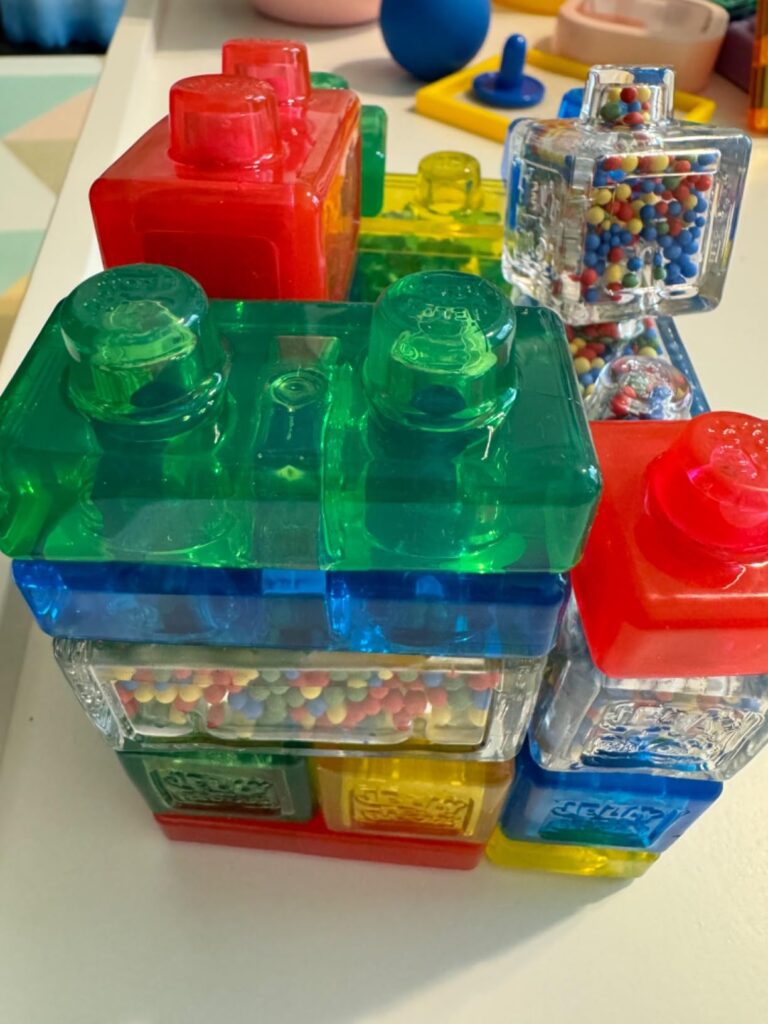
Because the material bends, you have to line up the connection and press more deliberately. A hard block gives you a very clear position immediately. With Jelly Blox, a child may need to adjust the pieces and try again.
I initially thought this might frustrate the younger kids.
Instead, it became part of the play.
They spent longer trying to connect pieces and were much more willing to pull something apart and rebuild it. Soft blocks also make failed structures less dramatic. A tower can collapse without hard pieces flying across the room.
For a two-year-old, connecting some shapes can still take real effort. I see that as one of the better parts of the toy as long as the child is not expecting instant success.
There is a lot of gripping, pressing, pulling, and repositioning involved. Those are simple movements, but they keep little hands busy in a way that passively squeezing a normal squishy does not.
The 20-piece set is enough to understand the idea and make small builds. It is not enough for a giant construction project. Once the children started making larger things, I understood why the sets are designed to work together.
I can already see myself adding another kit.
The MESH Accreditation Makes More Sense After Playing
Jelly Blox carry MESH accreditation, which focuses on mental, emotional, and social skills developed through play.
I am generally skeptical when a toy box starts making broad developmental claims. A logo on packaging does not prove that one toy will transform a child’s emotional development.
The actual play pattern here does make some of those claims easier to understand, though.
A child has to figure out why two pieces will not connect, change the angle, and try again. A structure bends in an unexpected direction, so the child adapts it. Something falls apart and they decide whether to rebuild it or make something different.
That is a much more concrete argument for problem solving and perseverance than simply saying a toy is “educational.”
I also noticed fewer immediate meltdowns when a build failed than I sometimes see with more rigid toys. There is no dramatic crash, and rebuilding is quick. The blocks invite experimentation because almost nothing you do with them feels like the wrong way to play.
Sometimes the kids stopped building completely and started inventing something else with the pieces.
That is fine with me. I would rather have a toy that gets used incorrectly for an hour than one that gets used correctly for five minutes.
Stepping on Jelly Blox Doesn’t Hurt
Parents who have stepped barefoot on a hard building brick will understand this point without further explanation.
Jelly Blox are soft enough that stepping on one is basically a non-event.
I tested it intentionally after realizing how often the blocks ended up on the floor. The block compresses under your foot instead of attacking it.
With small children constantly carrying toys from one room to another, this is more useful than it sounds. I don’t have to scan the floor before walking through the room.
Throwing them is less concerning too. They still have some weight, so I wouldn’t encourage children to launch them at each other, but a Jelly Blox block hitting furniture is very different from a solid plastic brick doing the same thing.
They are also quiet. That makes them much easier to tolerate in a car or anywhere you don’t want a box of plastic parts rattling constantly.
They Have Survived Much Rougher Play Than I Expected
Soft toys can sometimes look durable right up until the first small tear appears.
I was particularly curious about the filled Jelly Blox because a damaged block full of sand would obviously be much more annoying than a damaged empty one.
So far, mine have held up.
They have been squeezed hard, stretched much further than I would normally stretch a building toy, thrown around, and chewed on by children. I also tried pulling and pressing them harder than normal play requires to see whether a seam would start opening.
Nothing leaked.
The surfaces still look good after several weeks of regular use.
I would not call them indestructible. Any soft material can eventually get damaged, and I would take a split or punctured filled block away from a young child immediately. But Jelly Blox have taken more abuse than I expected from something this soft.
If your child has a habit of destroying normal toys surprisingly quickly, that durability is a meaningful advantage.
Cleaning Them Is Easy
The slightly tacky surface was another thing I worried about before buying them.
Some squishy toys become disgusting remarkably fast. Dust sticks to them, hair sticks to the dust, and eventually the whole thing feels permanently dirty.
Jelly Blox have been much better.
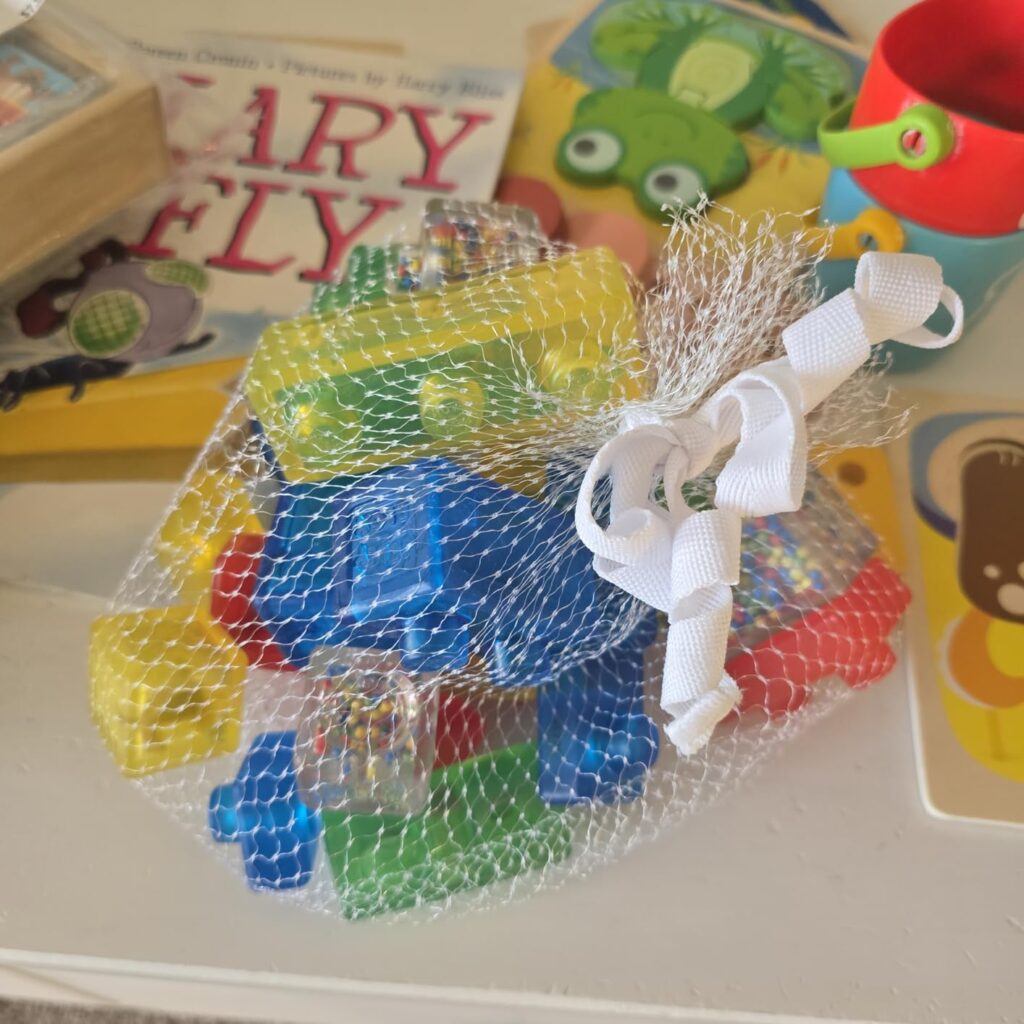
A stray hair or small piece of debris occasionally sticks, particularly if a block has been on the floor. They don’t seem to turn into dust magnets during normal use, though.
When they do get dirty, I wash them with warm water and ordinary dish soap.
That’s it.
After rinsing and drying, mine look almost new again. Being able to wash them properly also makes me much more comfortable letting the kids take a few outside or play with them somewhere other than the living room.
I would much rather wash a toy than spend the entire time telling a child not to put it on the floor.
My Main Complaint Is Still the Price
When I first opened the Creative Kit, my reaction was basically: is that all?
Twenty blocks do not fill a particularly large box, and only some of them contain the interesting sensory fillings. The normal blocks are still satisfying, but the filled ones are clearly the stars of the set.
That makes the price feel high on first inspection.
After several weeks, I mind it less.
The blocks haven’t become a forgotten construction set at the bottom of a toy bin. They get built with, carried around, squeezed during cartoons, and taken on trips. I use them myself.
A toy that gets that much use has more value to me than a larger set that looks impressive on Christmas morning and disappears a week later.
I would still like more sensory-filled pieces for the money. If Jelly Blox ever sells a pack made mostly from those, I am probably exactly the person they are targeting.
Are Jelly Blox Good for Two-Year-Olds?
Yes, especially for a child who already enjoys tactile play.
The Creative Kit is sold for ages 2+, and that feels about right from my experience. The blocks are large enough for little hands to grip and soft enough to tolerate fairly chaotic toddler play.
I still supervise young children with them, particularly during the stage when every toy eventually ends up in someone’s mouth. The filled pieces are sealed, but I would remove any block that became punctured or visibly damaged.
Older preschoolers get more out of the building side because they can connect the pieces more deliberately. Younger children may spend just as much time squeezing, carrying, and examining them.
That does not make the toy less useful. It just changes what the child does with it.
They Work Surprisingly Well as a Travel Toy
I have started taking a few Jelly Blox with us instead of carrying the whole set.
You don’t need all 20 pieces to make them useful.
Two or four blocks can keep little hands occupied in the car, at a restaurant, or while waiting somewhere. They don’t make much noise and there aren’t tiny accessories constantly disappearing under seats.
If something gets dropped on a dirty floor, I can wash it later.
That combination makes them much easier to travel with than many construction toys.
I also like that there is no setup. Hand a child a block and play starts immediately.
Who I Think Will Actually Enjoy Them
Jelly Blox make the most sense for children who already gravitate toward sensory toys or enjoy building but want something less rigid.
They are also a good option for a shared play space such as a preschool classroom because children can use the same pieces in completely different ways. One child can build. Another can spend ages exploring the fillings.
Adults who like squishies or desk fidgets should not dismiss them because of the toddler packaging either. I would genuinely buy some of the sensory pieces for myself.
The one person I would not recommend them to is someone looking purely for a traditional construction set. If the goal is elaborate, precise building, hard blocks are better at that job.
Jelly Blox become interesting because they are not very good at behaving like ordinary blocks.
My Verdict After a Few Weeks
I bought the Creative Kit because Jelly Blox looked strange enough that I wanted to understand them.
Now I want more.
The building system is fun, but the sensory part is what makes the toy stand out for me. I like squeezing the filled blocks far more than I expected, the kids keep returning to them, and they have survived everything we have done to them so far.
They also solve several boring practical problems. Stepping on one doesn’t hurt. A dirty block can go under the tap. A few pieces fit easily into a bag without making noise for the entire journey.
The weaknesses are straightforward. Twenty pieces can feel expensive, the surface occasionally picks up hair or dirt, and I wish more blocks had sensory fillings.
None of those have stopped us using the set.
After several weeks of borrowing blocks from the children more often than I would like to admit, Jelly Blox have become one of my favorite sensory construction toys.
If you only want blocks for building, I would buy something else.
If you want a toy that can be built with, squished absent-mindedly, washed after an adventure, and thrown into a travel bag for the next one, Jelly Blox make much more sense.
I’m already looking at which set to add next.