As an Amazon Associate I earn from qualifying purchases.
If your family usually avoids board games, I would start with Hues and Cues. It takes only a few minutes to understand, a game lasts around 30 minutes, and most of the fun comes from talking to each other rather than mastering rules.
That last part matters.
A lot of “best family board games” are recommendations from people who already like board games. A 20-minute rules explanation might feel completely normal to them. Put the same box in front of relatives who would rather keep talking after dinner, and you may lose half the table before the first turn.
I think a good game for a non-gaming family needs a much lower barrier. People should understand what they are trying to do almost immediately. Turns cannot drag. Losing should not mean sitting around for another hour, and preferably the game should create conversation beyond discussing the rules.
There is no single game that fits every family, though. Playing with a five-year-old is different from trying to entertain six adults at Christmas. Someone who enjoyed a few simple games may also be ready for more strategy than someone who has not touched a board game since Monopoly.
These are the four I would consider first, depending on who is actually sitting at the table.
Hues and Cues: My First Pick for Most Families
Hues and Cues is the easiest recommendation here for a mixed family group. It supports 3 to 10 players, is rated for ages 8+, and a normal game takes about 30 minutes.
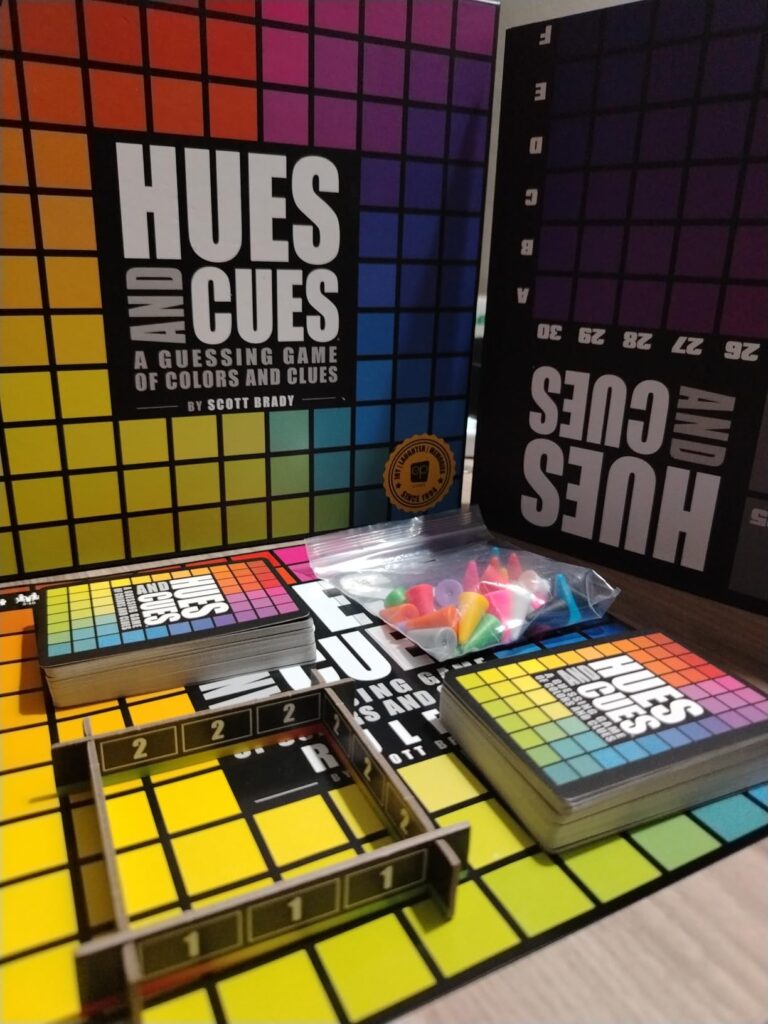
The board is essentially a huge grid containing 480 color spaces. On your turn, you secretly get a target color and give everyone else a short clue that you hope will lead them toward it.
The interesting part is that you cannot simply say the name of the color.
Imagine that your target is a particular pale green. You might say “avocado.” Someone immediately thinks of the bright green flesh of a ripe avocado. Someone else pictures the darker skin. Another person is apparently buying completely different avocados and puts their marker somewhere that looks almost yellow.
That disagreement is the game.
You eventually give another clue, and everyone gets another chance to narrow down the color. Points depend on how close the guesses land to the actual square.
There is some scoring, but I would not buy Hues and Cues because of its scoring system. The reason to own it is how easily those simple clues turn into conversations.
Colors are strangely personal. “Coffee” might mean nearly black to one person and milky beige to another. A clue based on a movie character, food, or something in your house can be obvious to one family member and completely useless to everyone else.
That makes Hues and Cues unusually good when different ages are playing together. It does not require a child to know trivia that adults have accumulated over 30 years. Adults also cannot dominate simply because they understand probability or have played 200 strategy games.
You can explain the core idea before everyone has finished choosing where to sit.
There is also very little downtime. With six people around the table, everyone is still looking at the same board and thinking about the same clue. Nobody has to watch another player spend five minutes quietly optimizing their turn.
The main limitation is equally obvious: the entire game depends on colors. Someone with significant color vision problems may have a very different experience, and people who simply do not enjoy association or clue-giving games may find the idea thin after several plays.
For most casual family gatherings, though, that simplicity is exactly what I want.
If someone tells me, “My parents hate board games, my brother gets bored easily, and we need something for after dinner,” this is the box I would reach for first.
Outfoxed!: The One I’d Choose for Younger Kids
Families with preschoolers have a different problem. Even an “easy” family game can become exhausting if a child needs an adult to read every card or keeps getting knocked out before everyone else.
Outfoxed! is designed around that problem.
It is a cooperative mystery game for 2 to 4 players, officially rated for ages 5+, with a playtime of about 20 minutes.
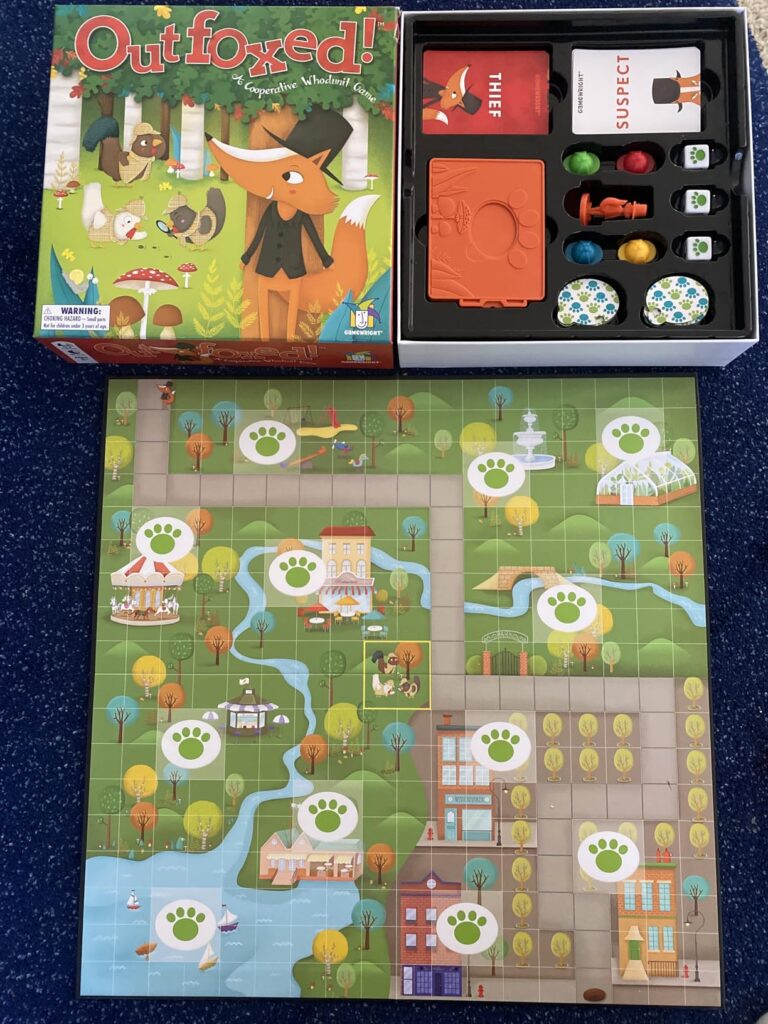
A pie has disappeared, and one of the fox suspects stole it. Everyone works together to find clues and identify the guilty fox before it escapes.
The physical clue decoder is a particularly clever part of the game. You gather evidence, feed it into the decoder, and use the result to eliminate suspects. A clue might tell you something about what the thief was wearing, gradually reducing the number of possible foxes.
There is no reading requirement built into the main deduction process. That makes it much easier to involve a child who is not yet comfortable reading cards independently.
More importantly, nobody at the table is the enemy.
Everyone catches the fox together or everyone loses together. That removes one of the easiest ways to ruin a first board game experience with a young child: an adult spends 20 minutes explaining the rules and then immediately beats them.
Cooperative play also lets adults help without breaking the game. You can ask a child which suspects should be eliminated or talk through the evidence together. Helping them reason through a clue is part of playing rather than secretly making their decisions for them.
I would not buy Outfoxed! for teenagers or an adults-only game night. Once you understand the deduction system, there is not enough complexity to keep an adult group interested for long. That is not a flaw so much as a consequence of designing a game that a five-year-old can actually participate in.
Its sweet spot is a household with younger children that wants to move beyond games based entirely on luck.
For that job, it makes much more sense than buying a complicated “family game” and expecting a small child to grow into it.
Cascadia: The Best Step Into Strategy Games
If everyone at the table can handle a little strategy but you still want to avoid conflict and complicated rules, I would look at Cascadia.
It is for 1 to 4 players, rated 10+, and usually takes around 30 to 45 minutes.
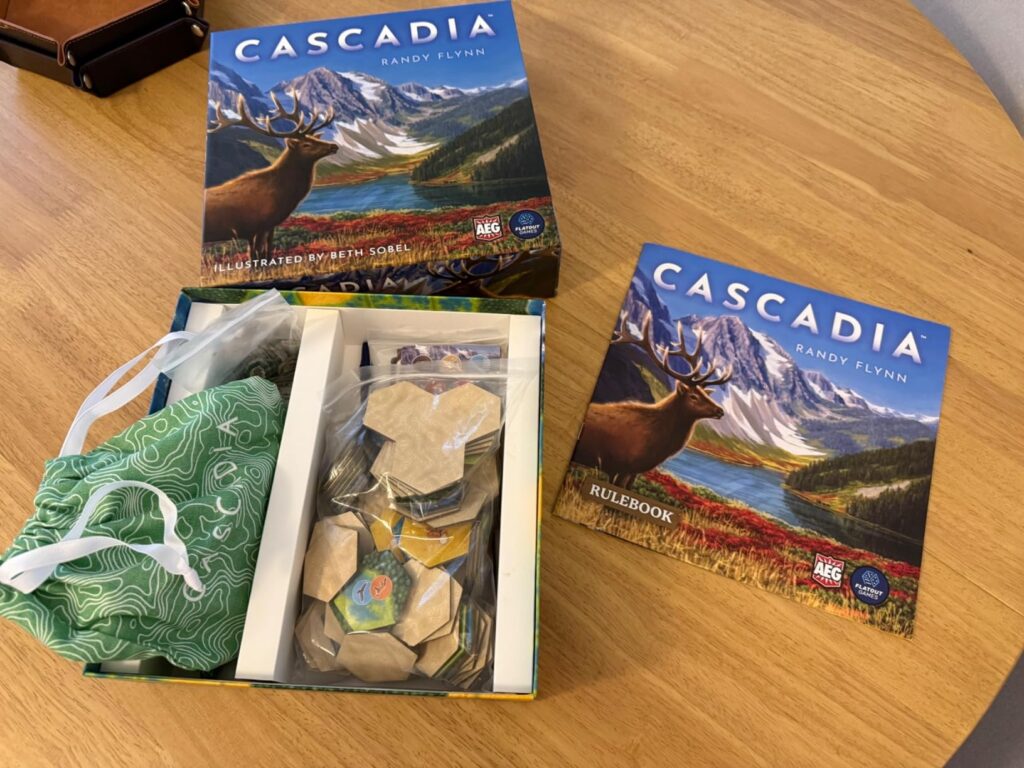
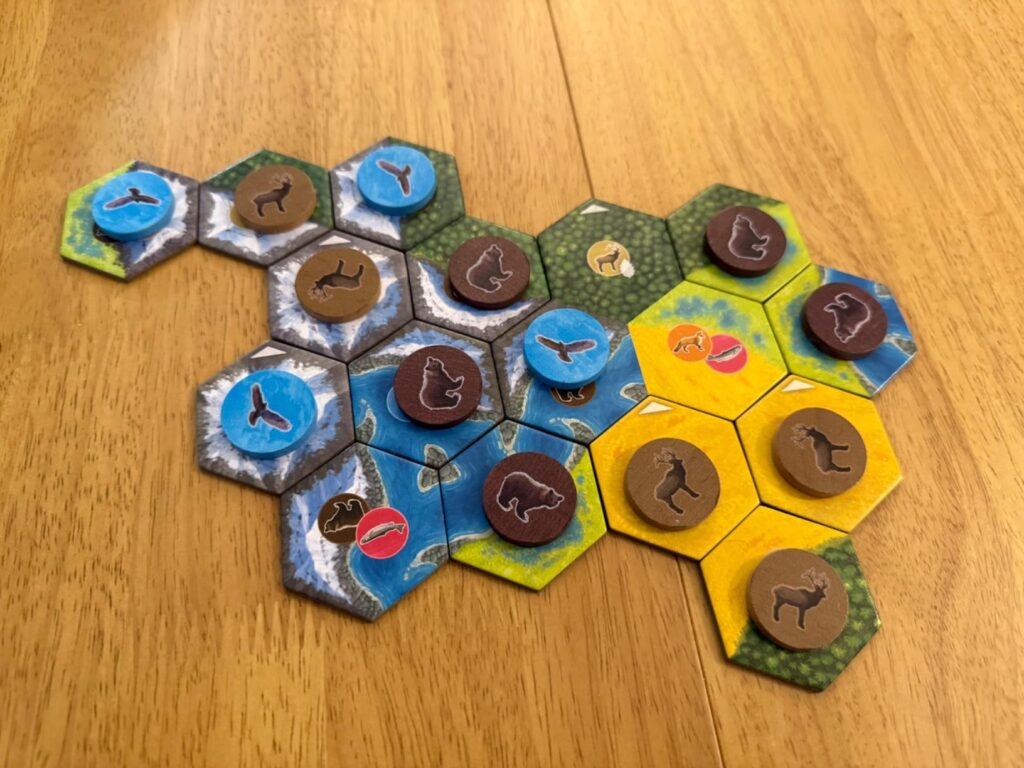
Each player builds their own section of the Pacific Northwest using hexagonal habitat tiles and wildlife tokens. Habitats connect into larger areas, and the animals score according to different placement patterns.
A turn starts with a straightforward choice. You select one of the available habitat tile and wildlife token pairings, then add them to your growing ecosystem.
The decisions get more interesting as your map expands.
Perhaps you want a particular animal because it completes a scoring pattern. Taking it means accepting a habitat tile that does not connect neatly to the terrain you have already built. Another option gives you the landscape you need but leaves you wondering where you will put the animal.
That is enough strategy to make your choices matter without requiring you to study a player aid every turn.
Cascadia is also much less confrontational than many traditional board games. You are primarily solving your own spatial puzzle. Another player can take the tile you wanted, but nobody is marching an army into the habitat you spent half an hour building.
That matters if your family contains someone who says they dislike board games when what they actually dislike is being attacked in board games.
The theme helps too. The table gradually fills with forests, rivers and wildlife instead of abstract victory-point machinery. You can see what you have built even if you are not particularly interested in maximizing your score.
There is a family scoring variant included in the game, which is useful for the first few sessions. The full scoring cards introduce different patterns for bears, salmon, elk and the other wildlife, so there is room to increase the puzzle once everyone understands the basics.
Cascadia also works with one player, which is unusual among the games in this article. More importantly for most households, it still works properly with two. You do not need to gather six relatives every time you want to get the box out.
I would choose Cascadia over Hues and Cues for a family that wants to think quietly and make meaningful decisions. I would choose Hues and Cues if the goal is getting a larger group laughing and talking as quickly as possible.
Cascadia does require more explanation. The scoring in particular takes a little time to click. If your family becomes visibly suspicious whenever someone opens a rulebook, start somewhere else.
If they enjoy it, though, Cascadia is a very good bridge into modern board games. It demonstrates that strategy does not have to mean a three-hour game with 40 pages of rules.
Plunder: A Pirate’s Life Is for Families Ready for Something Bigger
Plunder: A Pirate’s Life is the outlier on this list.
The official range is 2 to 6 players, ages 10+, with a stated playtime of 60 to 120 minutes. I would treat that as a substantial commitment compared with the other three games here.
You build a pirate fleet, capture islands, collect resources and upgrade your ships. The map is modular, so its layout changes between games.
There is also much more direct competition.
Ships fight. Players compete over territory. Decisions made by another person can interfere directly with your plans.
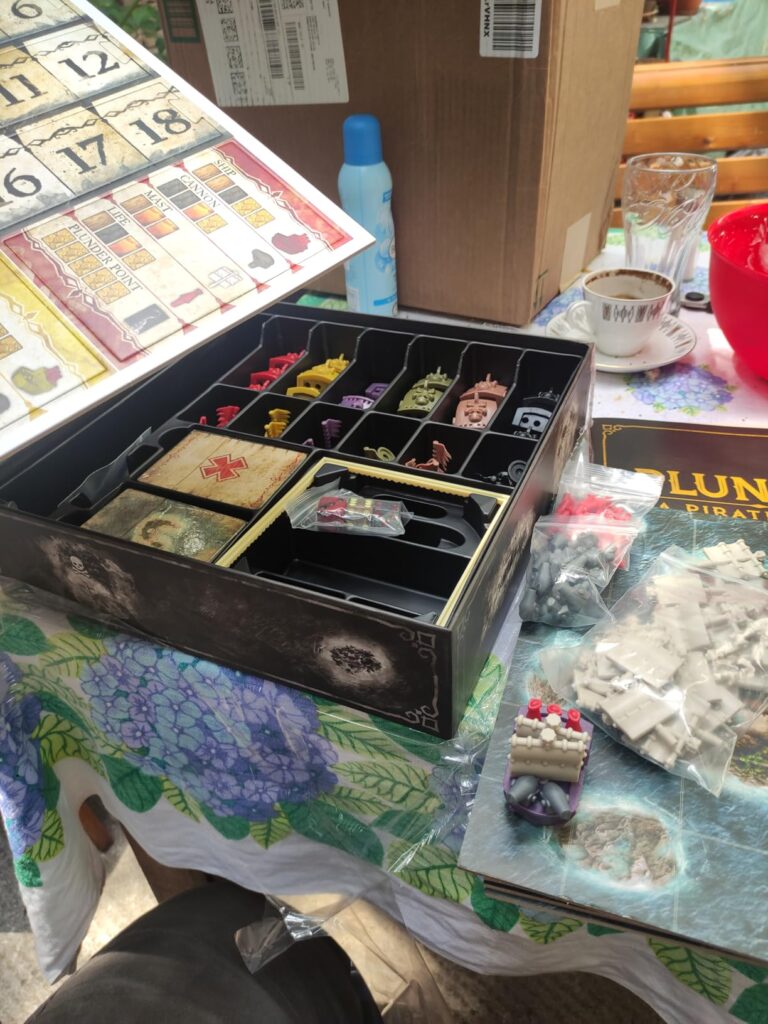
For the right family, that is exactly the attraction. Plunder actually feels like an adventure developing across the table rather than a quick activity before dessert. The ships and pirate theme also give people something concrete to latch onto as they learn how the systems fit together.
I would still hesitate to introduce it to a group where three people have already announced that they “don’t really like board games.”
An hour is the publisher’s low end for playtime. Learning the game and playing with a full group can push an evening well beyond the time someone expected to spend casually trying a game.
There are also more decisions to understand than in Hues and Cues or Outfoxed!. Someone has to teach those systems clearly.
That makes Plunder a better second or third step.
Maybe your family tried a few lighter games and discovered that everyone likes having an actual objective to work toward. Perhaps your kids are old enough to want more control over what happens. Or you want one game that can occupy most of an evening rather than a 30-minute filler.
Then I would seriously consider it.
The theme also makes it easier to introduce strategy to people who are not interested in strategy for its own sake. “Build a pirate fleet and capture islands” gives a new player a clearer reason to care about their choices than an abstract explanation about collecting resources for victory points.
Just know what you are buying. Plunder is not my recommendation for tricking reluctant relatives into playing a quick game. It is the choice for a family that is ready to turn game night into the main activity.
Which One Should You Get?
For a family that genuinely does not play board games, Hues and Cues is where I would start. It asks very little from new players and works with up to ten people, which makes it much easier to bring out when relatives or friends are already together.
If young children are the reason you are looking for a game, choose Outfoxed! instead. A five or six-year-old can participate in the actual deduction rather than just moving pieces under an adult’s supervision.
Choose Cascadia when your group wants more decisions and less noise. It is the game here I would most readily play with two people on an ordinary evening, and it has enough depth to remain interesting after everyone understands the rules.
Save Plunder for a family willing to commit at least an hour and learn a fuller strategy game. It can be the most substantial experience of the four, but that is only an advantage when everybody wants that kind of evening.
I also would not worry too much about finding a game that every person in the family will love forever.
The first goal is smaller: find one that people agree to play a second time.
If a 30-minute color game gets someone who normally refuses board games to say “one more round,” you have already found a much better family game for that table than a critically acclaimed strategy game nobody wants to open.